top of page


EXPERTS & RESOURCES
Experts and resources beyond REEL for families navigating twice-exceptionality, from diagnosis to thriving.

GETTING REEL


Fluctuating Capacity: Why Your Child Can Do It One Day but Struggle the Next
“But you did it yesterday!” If you’re parenting a neurodivergent or twice-exceptional (2e) child, you may have found yourself thinking this, or even saying it out loud. Yesterday, your child did their homework, got dressed independently, or unpacked their lunch bag without prompting. Today, that same task seems insurmountable. You might find yourself feeling frustrated, confused, or wondering why something they can do suddenly seems beyond their reach. It’s easy to interpret
4 days ago


From Elementary to College: Executive Functioning Challenges and Supports for Twice-Exceptional Learners
A student can understand complex concepts yet forget to submit homework, have sophisticated ideas but struggle to put them on paper, or earn A’s while barely managing the demands behind those grades. This is common among twice-exceptional (2e) learners, students whose advanced abilities coexist with learning, attention, or developmental challenges. Their strengths can mask their struggles, and their struggles can hide their strengths. As students move from elementary school t
Oct 2
Video: Supporting Executive Function in Twice-Exceptional Learners
REEL hosted a panel with three executive function experts, Mason Tudor, Maxwell Greenberg, and Presh, covering practical, real-world strategies for supporting 2e kids with executive function challenges, big emotions, and building independence.
Sep 16


Preparing for Back-to-School: Executive Functioning Systems for Parents of 2e Children
You’ve seen all the marketing: get your kids their new backpacks, water bottles, school supplies, etc. Influencers on Tiktok or Instagram focus on the “Top 5 Things Your Kids Should Do Before Back to School”. Where “Back to School” season fails is getting PARENTS ready for the transition back to school. For many families of twice-exceptional (2e) children, back-to-school isn't just busy. It's a period of heightened anxiety, increased executive functioning demands, sensory ch
Aug 6


Understanding and Supporting Emotional Regulation in 2e Children
As a pediatric occupational therapist, one of the most common questions I hear from parents of twice-exceptional (2e) children is: "Why does my child have such big reactions when they're so incredibly smart?" Twice-exceptional children are those who are both gifted and have one or more learning, developmental, or neurological differences such as ADHD, autism, dyslexia, dysgraphia, anxiety, or sensory processing differences. These children often possess remarkable creativity
Jul 14


How to Build Routines With Your 2e Child (Without the Fights)
When Even the Best Plans Fall Apart My 18-year-old sister and I planned what was supposed to be the perfect New York City summer adventure. By day two, we were fighting every single day, and I could not figure out why we kept ending up in the same place. After a fun day at The American Museum of Natural History, we were exhausted and needed to take a break. Our next plan was to end the day by watching the sunset at Summit One Vanderbilt. But every “perfect” plan has its own f
Jul 9


Beyond Processes: Executive Function Support for 2e Learners That Actually Sticks
I have started more planners in my life than I can count. Paper planners, app-based ones, even a chaotic color-coded sticky-note phase I would rather forget. Not to mention the 24x18 whiteboard calendar that still read “September” as Thanksgiving approached, a loving tribute to my gift for starting systems and my brain’s total indifference to maintaining them. I am twice-exceptional, and for a long time I assumed the unused planners meant something was wrong with me. It took
Jul 2


Day Trips as Executive Function Practice: Fun, Low-Stakes Ways to Build Real-World Skills
Executive functioning challenges impact school, but school isn't always the best place to learn them. Discover how low-stakes family day trips create natural, stress-free opportunities for neurodivergent and 2e children to practice planning, organization, and resilience when things change.
Jun 14


Traveling with 2e and Neurodivergent Kids: 3 Essential Tips for Building Connection, Regulation, and Resilience
What do you want your child to remember about your next trip? Instead of focusing on packed itineraries, explore how prioritizing regulation and emotional safety can help your neurodivergent or 2e child navigate the unexpected and build lasting, positive family connections.
Jun 14


When Organizing Feels Hard: 10 Tools That Help
Small Tools Make a Big Difference If organizing has ever felt harder than it “should”… If your new planner only worked for three days… If the labeled bins looked beautiful but didn’t change anything… You’re not doing it wrong. Most organizing systems aren’t built for neurodivergent brains. They assume that structure automatically leads to follow-through. If you just buy the right container, print the right checklist, or commit harder, everything will click into place. But
Mar 19


Executive Function Made Easier: Practical Strategies for Your 2e Child
If you’re parenting a child who is both wonderfully bright and wired a little differently, you’ve probably seen just how incredible their mind can be and how frustrated they can get when everyday tasks feel harder than they “should” be. Many twice-exceptional (2e) learners have incredible abilities, yet still face real challenges with executive functioning , communication, and day-to-day routines. The good news is that with the right support, your child can learn the skills
Jan 13


High School 2e Executive Function Back to School Reboot
High school brings an increase in EF demands, as students are expected to take more responsibility for tracking assignments, managing...
Sep 10, 2025
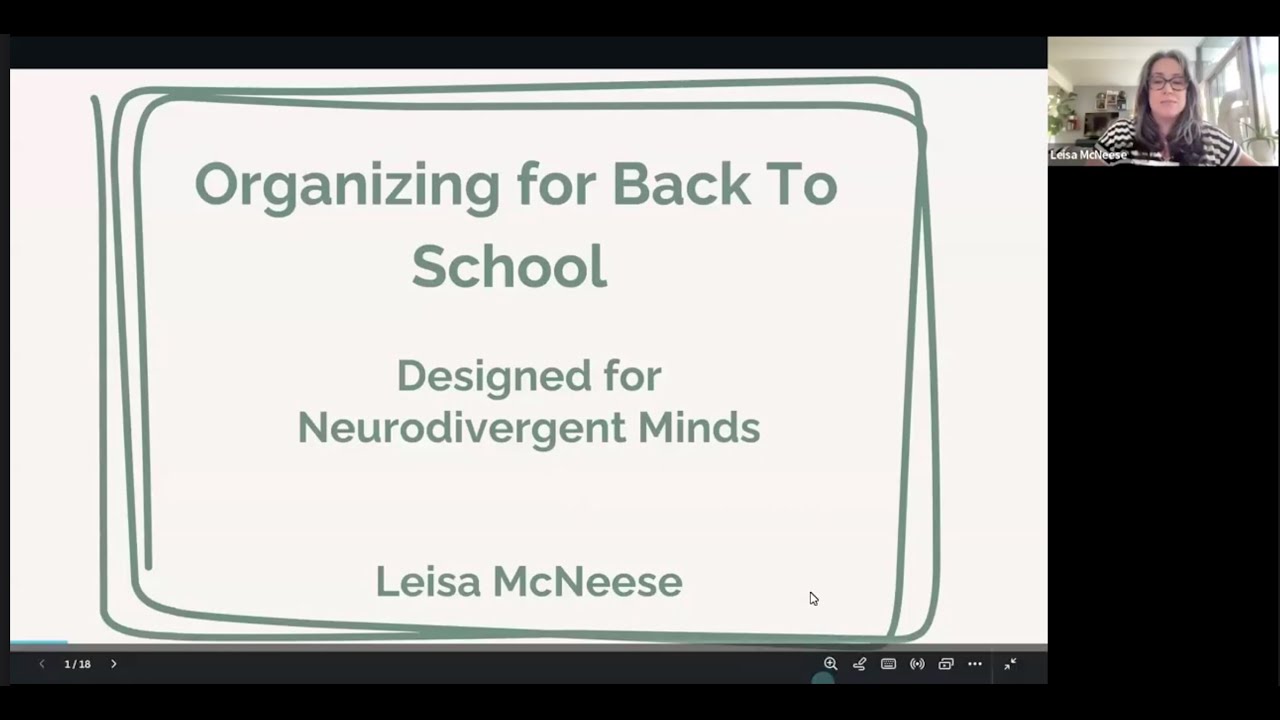
Organizing for Back to School for 2e / Neurodivergent Learners
At the July 2025 PHP REEL Support Group, Leisa, a 2e/neurodivergent parent and professional from Calm in Chaos Co who specializes in organizing spaces for neurodivergent brains and lifestyles, spoke about organizing for back to school. She follows a “strengths-based” philosophy. "What strengths do I have and how can I use my strengths and awareness of struggles to organize our spaces to work for us?" She offered great tips like, “take sensory sensitivity into consideration w
Jul 22, 2025


Executive Function Scaffolding
In this video, we explore the concept of scaffolding through the worksheet Can We Figure Out a Different Way?—a tool designed to support neurodivergent learners by focusing on accessibility, not ability. Learn how to scaffold tasks in a way that aligns with your child’s strengths and unique neurodivergent profile.
Jul 15, 2025


EF Tasks: Can We Figure Out a Different Way?
This worksheet helps you reframe a challenging task and identify a strength-based way your child might approach it differently. Use it to brainstorm alternatives that preserve the goal but make the path more accessible. It may be helpful to refer to EF Vocabulary Cheat Sheet . 1. What task or situation is currently difficult for your child? ________________________________________________________________________ ______________________________________________________________
Jul 14, 2025


Strengths and EF Struggles 2e Map
Strengths & Struggles Map Instructions: Draw two overlapping circles, similar to a Venn diagram. One circle is labeled "Strengths" and the other "EF Struggles." In the overlap, identify the areas where gifted traits and executive functioning challenges intersect —this is often where 2e complexity resides, and we can begin to strategize scaffolding that works with a child’s strengths. (Refer back to the Example Strengths and Struggles Map for examples.) Circle 1: Strength
Jul 14, 2025


2e Executive Function Vocab and Focus Areas Cheat Sheet
This cheat sheet is designed to help you better understand the executive functioning (EF) skills your twice-exceptional (2e) child may be...
Jul 14, 2025


Executive Function in 2e Learners
Parents of twice-exceptional (gifted + learning differences) kids face challenges with executive function (EF) skills, which develop slower in neurodivergent children. Tools like the EF Vocabulary Cheat Sheet and Strengths & EF Struggles Map help families identify challenges and strengths. Involving kids in these exercises builds self-awareness and support strategies.
Jul 14, 2025


Strength Based Scaffolding for Executive Function Skills
This is an example from our facilitated small group discussions. It is meant to help parents realize they are probably already scaffolding in some areas and how tailoring scaffolding to their child's strengths could be more helpful in finding the best way to scaffold their child.
Jul 14, 2025


Ask Lucy Monthly Column: Rigidity, Starting to Write, Checking Email
Do you have a question you’d like the column to answer? You can email asklucy@reel2e.org. My autistic 2e teenager is highly resistant to changing his ways of doing things. I've encouraged him to write down important events in his calendar, but he won't because he "doesn't need to" (even though he inevitably forgets). His inbox has nearly 4,000 messages because he refuses to delete or archive emails. Whenever I try to talk to him about this stuff, we end up in a tug-of-war. Is
May 20, 2025
bottom of page