SEARCH RESULTS
Search this site
243 results found with an empty search
- Whole Child Snapshot & Strength Based School Communication
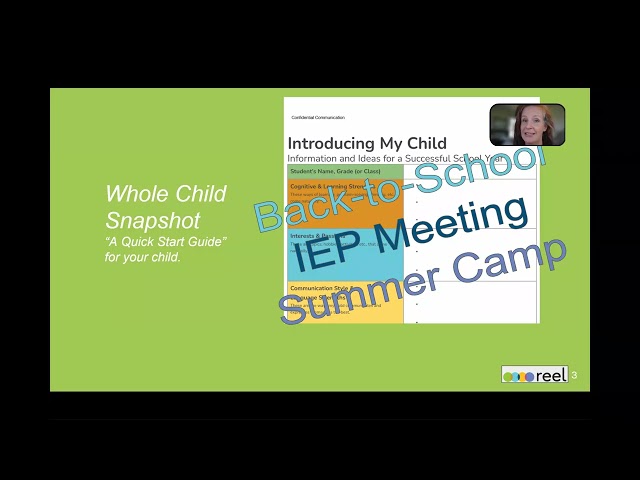
When we change the way we talk about our children, we change the way the world sees them, and how they see themselves. This page introduces two simple and practical tools, the Whole Child Snapshot and the Strength-Based Language Cheat Sheet, that help you share your child’s story with schools in a way that is clear, positive, and actionable. Communicating the Whole Child As parents, we know our children are more than their challenges. They are creative, curious, and capable, even if they need support in certain areas. The key is learning how to communicate this in a way that schools can hear, act on, and partner with us. That is why we created a short video (approx. 5 minutes) to walk you through two practical tools: Strength-Based Language Cheat Sheet Introducing My Child: A Whole Child Snapshot Together, they help you share your child’s story in a way that is both positive and actionable. Tool 1: The Whole Child Snapshot The Introducing My Child Snapshot is a one-page overview you can share with teachers, counselors, and support staff. It captures: Interests and passions Social-emotional cues Sensory preferences Support needs, scaffolds, and more… Think of it as your child’s introduction letter. It is clear, positive, and practical. It ensures educators see not only what your child struggles with, but also what lights them up and helps them thrive. Tool 2: The Strength-Based Language Cheat Sheet The words we use matter. If we only describe our child in terms of their struggles, schools may unintentionally see them as a list of deficits. The Strength-Based Language Cheat Sheet helps you reframe common concerns into affirming, constructive statements. For example: Instead of: “She gets distracted easily.” You might say: “She notices many things in her environment and has a wide curiosity. With tools for focus, she can channel that curiosity productively.” This tool includes many examples like this, along with a simple formula you can use to create your own reframes. This way, you will always have language that keeps the conversation strengths-focused, reduces defensiveness, and points directly to strategies that can help. Why It Matters Advocating for your child does not have to mean conflict or constant explanations. With these tools, you walk into school meetings prepared, confident, and ready to highlight the whole child. Read the Video Transcript Here 0:05 Hi everyone, Teresa from REEL. Today I want to share a quick look at some of the tools and ideas that might help you in so many different moments throughout the year. Whether you're introducing your child to a new teacher, preparing for an IEP meeting, or sending them off to camp, this information in the examples that I'll share come directly from our facilitated small group discussions. 0:31 In our back to school series, parents worked with these tools and adapted them to fit their family's unique needs. And while we started with back to school, these resources can be used year round anytime a new adult steps into your child's life. 0:50 Often adults who meet our child for the first time may only get a glimpse of who they are. Maybe they've heard how they behave in the classroom or they've seen what is written on a short intake form. But our kids are so much more than that. 1:07 That's why we created the whole child snapshot. It is a simple one-page tool that highlights your child's strengths, interests, support needs, and sensory and social emotional cues. Think of it as your child's quick start guide. 1:25 And here's some important information that we want you to do. Invite your child to fill it out with you. Their answers might surprise you and spark some insightful conversations on how they see themselves, the environments that they're in, and what they need to support them to be successful. 1:45 Here's an example. If you're starting a summer camp, you might make a note that says, "He or Shethrives when given a 5-minute heads up before transitions." Or for a teacher, you might include something like, "Layla loves science experiments and can get deeply focused when doing hands-on learning." 2:08 These small details help a new adult connect with your child more quickly and support them in the ways that matter. And remember, this document is not static. It is meant to change and grow with your child's strengths and evolving needs. 2:26 But it's not just about what we say, it's about how we say it. And that's where the language, strength-based language cheat sheet comes in. Too often, conversations focus only on challenges, things like attention issues, anxiety, or handwriting struggles. 2:47 When that happens, teams might lose sight of your child's abilities. Strength-based language helps us pair needs and strengths together so that educators can see a full picture of our child. For example, instead of saying Taylor gets distracted easily and might not finish their work, you could say Taylor is deeply curious and often notices details that others miss. With support for staying on task, Taylor can channel their curiosity and attention to detail into completing assignments. 3:26 You see the shift? You are naming the need, but you're also anchoring it in your child's strengths. This kind of framing is not only to keep the conversation more positive. 3:40 It's to help others like educators see that your child is capable and resourceful and not just a list of challenges. 3:49 As a reminder, strength-based language communication is not about sugar coating. It's about accuracy, advocacy, and creating a foundation for long-term impact. It does take practice. Many of us were raised in a culture that focused on weaknesses or struggles. So, it's natural that shifting our language feels new at first, but it's worth it. 4:17 We can use the cheat sheet before you write an email or you go into your parent teacher conferences or prepare for an IEP. Pull it out. Look over the phrases that capture your child's strengths and then practice pairing them with the support needs that they have. 4:36 And when you pair that with the whole child's snapshot, you are not only giving teachers and support staff a clearer picture of who your child is, you're also setting the tone for a collaborative and strength-based partnership all year long. I encourage you to download these tools, try them out with your child, and update them regularly as your child grows and their needs change because when we change the way we talk about our children, we change the way the world sees them and how they see themselves. 5:12 Both tools are available on our website along with many more resources. You can also join our online community through our website where you can connect with parents and caregivers who truly get it. You are not alone on this journey. Thanks for joining us.
- 3 Back-to-School Strategies Every Parent of a 2e Child Should Try
Every year, as summer winds down, we start making lists. School supplies. New backpacks. Schedules. Forms. Meet-the-teacher nights. All of these things are important. But before you begin preparing for the school year, I'd encourage you to pause and ask yourself one simple question: How do I hope my child feels by the end of this school year? Not what grade you hope they earn. Not what class you hope they get into. Not even what skills you hope they master. How do you hope they feel? Maybe your word is confident. Maybe it's happy, connected, understood, empowered, curious, accepted, or capable. Take a moment and write that word on a sticky note or a piece of paper. Put it somewhere you'll see it throughout the school year. Let it become your North Star. As parents of twice-exceptional and neurodivergent children, we make countless decisions throughout the year. We advocate in meetings, communicate with teachers, decide when to push and when to step back, and help our children navigate both challenges and successes. Having a clear vision of how we hope our child experiences the year can help guide those decisions. One quote we often use at REEL comes from Dr. Yong Zhao: "Human beings not only have the potential to be great in their own unique way, but also need to be great in their own unique way. They need to be great and relevant in order to be happy, to be psychologically healthy, and to have a strong sense of self-worth." I love this reminder because it shifts our focus. Our children do not need to become someone else. They need opportunities to become more fully themselves. Our role is not simply to help them succeed in school, but to help them discover who they are, what they enjoy, what they are good at, and what helps them thrive. Start by Seeing the Whole Child One of the best places to begin is with the Whole Child Snapshot (new for 2026). This simple one-page tool introduces your child to teachers, counselors, and support staff by focusing on who they are as a whole person. Rather than beginning with challenges or accommodations, it begins with strengths, interests, what helps them learn, and the environments where they thrive. It is a simple shift, but a powerful one. When we change the way we talk about our children, we change the way the world sees them, and how they see themselves. As educators begin to understand your child's strengths alongside their support needs, conversations become more collaborative, more hopeful, and ultimately more effective. I also encourage you to complete the Whole Child Snapshot with your child. Use it as a conversation starter. Ask questions like: What are you really good at? What do you enjoy learning about? When does learning feel easier? When is it harder? What helps you do your best? What would you like your teacher to know about you? These conversations are about much more than filling out a worksheet. They help children begin to understand themselves, recognize their own strengths, and identify the environments and supports that help them be successful. That self-understanding becomes the foundation for something even more important: self-advocacy. Helping Children Find Their Voice Research continues to reinforce the importance of teaching self-advocacy skills to neurodivergent learners. A 2025 literature review published in Frontiers in Child and Adolescent Psychiatry found that autistic adolescents and young adults who develop self-advocacy and self-determination skills experience better educational outcomes, stronger self-concepts, healthier relationships, greater persistence, and improved quality of life. Self-advocacy is about much more than asking for accommodations. It begins with understanding yourself, recognizing your strengths, identifying what you need, and learning how to communicate those things to others. A child who can say, "I learn best when...", "I get stuck when...", or "It helps me when..." is beginning to build skills that will serve them throughout school and well into adulthood. That is why we created this short video on strengths-based language, the Strength-Based Language Cheat Sheet, and our Student Voice & Self-Advocacy Scripts. Together, these tools help children first understand themselves, then learn how to communicate their strengths and support needs with confidence. The scripts begin with simple language for young children and gradually become more sophisticated through upper elementary, middle school, high school, and the transition into adulthood. As children grow, so does their understanding of themselves. Their confidence increases, their learning needs evolve, and the ways they advocate for themselves naturally become more nuanced. Like any important life skill, self-advocacy develops over time. It grows through hundreds of small conversations, opportunities to reflect, and chances to practice using their voice in safe and supportive environments. Keep Coming Back to Your Word As the school year unfolds, come back to the word you wrote down. When you're preparing for an IEP meeting, writing an email to a teacher, or helping your child through a difficult day, ask yourself: Will this move us closer to my child feeling confident? ...connected? ...understood? ...capable? If the answer is yes, you're moving in the right direction. Preparing for school is about much more than buying supplies or organizing schedules. It is about helping our children understand who they are, recognize their strengths, communicate their needs, and discover that they have something valuable to contribute. When we begin there, we are preparing them not just for a successful school year, but for a lifetime of understanding themselves and confidently advocating for what they need. That journey begins with one conversation, one strength, and one word.
- Dysgraphia: When the Brain Knows What to Say, But the Hands Can't Keep Up
"My child is incredibly bright, but getting ideas onto paper is a daily battle." If this sounds familiar, your child may be experiencing dysgraphia—a neurological difference that affects written expression. Dysgraphia is much more than "messy handwriting." It impacts the brain's ability to efficiently communicate ideas through writing, making even simple written tasks exhausting. As pediatric occupational therapists, we often meet children who can explain complex ideas verbally but become frustrated, overwhelmed, or avoidant the moment they're asked to write. This is especially common in twice-exceptional (2e) children—those who are gifted while also having a learning difference or neurodevelopmental condition such as ADHD, autism, or dysgraphia. Understanding what is happening beneath the surface can change everything. Dysgraphia is a disorder of written expression that affects the ability to produce written language efficiently and accurately. While handwriting is one visible challenge, dysgraphia often affects multiple aspects of writing, including: ● Letter formation ● Spacing and organization on the page ● Writing speed ● Spelling ● Grammar ● Sentence organization ● Written composition ● Holding ideas in working memory while writing Many children with dysgraphia know exactly what they want to say—but getting those thoughts onto paper requires tremendous effort. Imagine trying to have a conversation while simultaneously solving a difficult puzzle. That is often how writing feels for children with dysgraphia. Writing is one of the most complex skills children learn. Successful handwriting requires many systems working together automatically including: visual processing, fine motor coordination, postural stability, bilateral coordination, motor planning (praxis), sensory processing, eye-hand coordination, working memory, executive functioning, language processing, and attention. When one or more of these systems is inefficient, the entire writing process becomes difficult. Instead of focusing on ideas, children use much of their brain power simply trying to remember: Which way does the "b" face? How hard should I press? Where does this letter start? Why won't my pencil cooperate? The result is mental fatigue before the assignment has truly begun. Children with dysgraphia are often misunderstood. Adults may notice there are incomplete assignments, slow work, poor handwriting, frequent erasing, resistance to writing, and emotional meltdowns during homework. What they don't see is the enormous amount of cognitive effort happening behind the scenes. These children are usually trying much harder than their peers. Twice-exceptional children often surprise adults. They may read years above grade level, have advanced vocabularies, ask deep, insightful questions, build elaborate creations, or memorize incredible amounts of information. But when asked to write a paragraph, they produce only a few short sentences—or refuse altogether. This mismatch between intelligence and written output can be confusing. In reality, the child's ideas are far exceeding the efficiency of their writing system. Many twice-exceptional children also experience perfectionism. They know their written work doesn't match the quality of their thinking, leading to frustration, anxiety, and avoidance. Without appropriate support, these children may begin to doubt their own abilities. While every child is different and shows up in different way in different stages of learning, common signs of dysgraphia may include: Early Childhood ● Difficulty learning to form letters ● Avoids coloring or drawing ● Weak pencil grasp ● Tires quickly during fine motor tasks Elementary School ● Messy or inconsistent handwriting ● Slow writing speed ● Frequent letter reversals beyond expected age ● Difficulty copying from the board ● Poor spacing ● Trouble organizing written work ● Leaves assignments unfinished Older Students ● Excellent verbal explanations but limited written work ● Writes very short responses despite knowing the material ● Avoids note taking ● Complains that writing hurts their hand ● Takes significantly longer than peers ● Becomes emotionally overwhelmed by writing assignments OT to the rescue! Occupational therapy looks beyond handwriting itself. Instead of asking, "How do we make handwriting prettier?" We ask, "What underlying skills are making writing so difficult?". Your child may qualify for OT support at school through IEP services. (2e students often have trouble qualifying for IEPs because they compensate for their challenges, read REEL's 2e IEP guide to learn more.) One of the most common things we hear from parents is, "The school said my child doesn't qualify for IEP services, so does that mean nothing is wrong?" The answer is no. School-based occupational therapy and private occupational therapy have different purposes. A school-based OT evaluation determines whether handwriting difficulties are significantly impacting a child's ability to access their education and whether the child meets the eligibility criteria for special education services. The focus is educational performance, and services are provided only if handwriting challenges interfere with the child's ability to participate in the school curriculum. A private occupational therapy evaluation, on the other hand, looks much more comprehensively at the "why" behind the handwriting difficulties. Rather than determining educational eligibility, a private OT examines the underlying body systems and developmental skills that contribute to writing, including sensory processing, postural control, fine motor coordination, visual-motor integration, motor planning (praxis), executive functioning, attention, and emotional regulation. Because private occupational therapy addresses the root causes of handwriting challenges—not just their impact on school performance—it can often identify areas of need long before a child qualifies for school-based services. Early intervention can prevent frustration from building, support confidence, and help children develop efficient writing skills before poor habits, anxiety, and avoidance become deeply ingrained. It's also important to remember that a child can be academically successful and still struggle significantly with handwriting. Many bright and twice-exceptional children earn good grades by working much harder than their peers, relying on exceptional memory, verbal skills, or parental support. These children may not qualify for school-based OT services, yet they often benefit tremendously from private occupational therapy that addresses the underlying skills needed for efficient, confident writing. At Therapeeps, our goal isn't simply to determine whether a child qualifies for services—we want to understand the whole child. By identifying each child's unique strengths and challenges, we can create individualized intervention strategies that help writing become more automatic, less frustrating, and a more effective way for children to express the incredible ideas already inside their minds. Occupational Therapy Supports that DO and DON'T Help Simply writing more is rarely the answer. Effective occupational therapy addresses the foundation first. Occupational therapy treatment may include: Building hand strength, improving postural control, developing bilateral coordination, enhancing visual-perceptual skills, practicing motor planning activities, supporting sensory regulation, teaching efficient letter formation, improving endurance, building keyboarding skills when appropriate, or developing accommodations that reduce unnecessary frustration. The goal is to reduce the amount of brain energy spent on mechanics so children can focus on communicating their ideas. Gifted children with dysgraphia need both challenge and support. Occupational therapists may recommend helpful accommodations including: speech-to-text technology, keyboarding, reduced copying, graphic organizers, extra time, oral responses or other methods of demonstrating mastery such as a skit, slideshow, podcast, or artwork when appropriate, access to note-taking supports, breaking large writing assignments into smaller steps. Accommodations do not lower expectations—they remove unnecessary barriers so children can demonstrate what they truly know. Looking Beyond the Pencil Dysgraphia is not simply a handwriting problem. It is a brain-body communication challenge that affects participation in school, self-esteem, and the ability to express knowledge. With the right support, children can develop efficient strategies, strengthen foundational skills, and learn that their ideas deserve to be shared—even if the path to getting them onto paper looks different. As occupational therapists, our goal is not just better handwriting. Our goal is helping children communicate their thinking with confidence, participate fully in learning, and recognize that their intelligence is never defined by the appearance of their handwriting. Early intervention can make a significant difference—not only in writing skills, but also in a child's confidence and willingness to learn. At Therapeeps Occupational Therapy Services, we believe every child has important ideas worth sharing. By understanding the whole child—not just the handwriting—we can help children build the skills, confidence, and strategies they need to thrive both in school and beyond. About the Author Brooke Olson, BS, OTR/L, BCP, SIPT With more than 25 years of experience in pediatric occupational therapy, Brooke Olson is passionate about helping children and families thrive through a neuroaffirming, relationship-based approach. Brooke founded Therapeeps Occupational Therapy Services to provide individualized, family-centered care grounded in sensory integration and the DIR®/Floortime® model. She specializes in supporting children with autism, ADHD, sensory processing differences, executive functioning challenges, feeding differences, emotional regulation, and twice-exceptional (2e) profiles.
- Preparing for Back-to-School: Executive Functioning Systems for Parents of 2e Children
You’ve seen all the marketing: get your kids their new backpacks, water bottles, school supplies, etc. Influencers on Tiktok or Instagram focus on the “Top 5 Things Your Kids Should Do Before Back to School”. Where “Back to School” season fails is getting PARENTS ready for the transition back to school. For many families of twice-exceptional (2e) children, back-to-school isn't just busy. It's a period of heightened anxiety, increased executive functioning demands, sensory changes, emotional uncertainty, and constant transitions. While we spend a great deal of time preparing our children, parents often need executive functioning support just as much. The reality is that when parents are overwhelmed, disorganized, or constantly reacting to surprises, our children often feel those effects too. Creating systems at home isn't about becoming perfectly organized. It's about reducing unnecessary cognitive load so everyone has more capacity to manage the parts of the school year that can't be predicted. We have to model strong executive functioning skills and the good news is that if you spend a little time setting up your systems at home, maintenance of those systems becomes simpler and more sustainable throughout the school year. The rule is simple: everything in one place. There are 3 main domains for organization: organizing your time, your physical space, and your digital life. These systems aren't about creating a picture-perfect household. They're designed to support executive functioning: the mental processes responsible for planning, organization, working memory, flexible thinking, and self-regulation. For many neurodivergent families, reducing cognitive load can make everyday routines feel more manageable. Predictable routines often reduce anxiety, shared calendars can minimize unexpected transitions that may be particularly difficult for many 2e children, and external systems can provide important support for parents with ADHD or executive functioning challenges themselves. Perhaps most importantly, children learn executive functioning skills by watching adults use them. Narrating your planning, calendar checks, or problem-solving out loud gives your child a real-world model for managing their own responsibilities over time. Time Management Systems It may feel a little labor-intensive now, but trust me, you’ll feel more in control not having to check multiple pdf’s to figure out how your day is going to go. Here’s a simple checklist of what should go on your calendar before the year. School calendars (I can't stress this enough–we want to mitigate the anxiety of finding out that tomorrow is a short day or worse, no school at all.) Sports schedule (including sign-up deadlines) IEP or 504 Meetings Educational therapy, occupational therapy, speech, counseling, or other support appointments Planned recovery or decompression time after especially demanding school days Doctors’ appointments Bus schedules Dropoff/Pickup responsibilities Family commitments and extracurriculars If multiple adults help support your child, consider using a shared calendar so everyone has access to the same information. Physical Management Systems Clear one area of clutter. I personally feel it’s unrealistic to have an “aesthetic home” (my house looks exactly like 3 little boys live here and we’ve made peace with that) but go ahead and clear one area. Physical clutter can increase visual distractions and cognitive load, making it harder to prioritize tasks and regulate attention—particularly for individuals with ADHD and other executive functioning differences. Research actually shows that college students clean their rooms and put away their laundry during finals–it’s not avoidance but rather creating mental space for what they’re being graded on. Set a 5 minute timer and accomplish what you can. Good enough. Clean or get a new backpack. Some families find that choosing a backpack with fewer compartments makes it easier for children to consistently locate papers and supplies. Fewer places to search may reduce executive functioning demands and decision fatigue. Other families may find different organizational systems work better—the goal is simply to create a system that's easy to maintain. Similarly, some students benefit from using a single binder with clearly labeled sections rather than multiple binders, while others do well with a different approach. Consider whether simplifying materials might reduce the number of decisions your child has to make throughout the day. Go through the pile of mail. Just do it. I guarantee it won’t take as long as you think. Time blindness is the inability to accurately predict how long something will take or “feel” time. Guess how long it’ll take and then time yourself to see if you were right. Digital Management System When digitally “executive functioning” for yourself your time is best spent dealing with your email. See my tips below. I’ll also include some other things to do digitally if you want to really take it up a level after you deal with your email. Clean your email. Email often becomes the hidden source of cognitive overload for parents. Simplifying your inbox reduces the mental effort required to remember deadlines, forms, and school communication. Old emails add to your mental clutter, so taking a few quick steps to archive these can go a long way in mitigating stress! In Gmail: Search in:inbox before:YYYY/MM/DD Select all emails in view Select all conversations that match this search and hit Archive. (If you have thousands of unread emails, this may take a few minutes for Gmail to catch up but don’t worry–it’s happening.) Sort your email by read versus unread. When you do this, unread emails go to the top of your inbox and become a “to do” list in your inbox. For the rest of the emails not archived in your purge, make quick decisions: Archive Unsubscribe Deal with it Mark as unread (becomes your to do list) These systems also create more opportunities for collaborative problem solving when something inevitably doesn't go according to plan. If you want to go above and beyond, here are some other simple things you can set up that will help you later: Passwords list. Just decide where it’s going and start adding as you go. Your native browser on your computer isn’t a solution because we all know it’s wrong the majority of the time and you waste time resetting your password. Make sure you can access your list on your phone too. Create a bookmark bar that has important websites including: Your email Your calendar Your learner’s school portals Your banks Back-to-school season is challenging for every family, and no organizational system will eliminate all of the complexities that come with raising a twice-exceptional child. Every neurodivergent family develops routines that fit their unique strengths, challenges, and values. The goal isn't perfection. It's reducing unnecessary executive functioning demands so your family has more energy for what matters most: connection, flexibility, collaborative problem solving, and helping your child recover from the many cognitive, emotional,social, and sensory demands of the school day. Remember that your systems can (and should) evolve. If something isn't working, adjust it. The best organizational system is the one your family can realistically maintain. About the Author Rachel Kapp, founder of Kapp Educational Therapy Group, grew up in Los Angeles. She graduated from the University of California, Berkeley, where she earned a Bachelor of Arts with Honors in Sociology and minored in Jewish Studies. Rachel began tutoring students in high school, eventually choosing to pursue a career in education. For over six years, Rachel was a lead preschool teacher where she gained a firm foundation in explicit teaching. Rachel has been a tutor in private practice since 2004, working with students in a variety of subjects including all levels of math, reading, history and writing. After working with so many types of students over the years and realizing she was passionate about building relationships with and helping students who learn differently, Rachel decided to become an educational therapist. She completed her coursework at the California State University, Northridge in December 2015 and Masters degree in December 2016. In her free time, Rachel loves spending time with her husband, Adam, her two sons, Elliot and Owen, and their dog, Fritzy, watching Cal Football, cooking for friends, and spinning. Rachel is a Board Certified Member of the Association of Educational Therapists, an active participant in ongoing education through the International Dyslexia Association, and a member of Children and Adults with Attention-Deficit/Hyperactivity Disorder (CHADD). Rachel is also trained in Wilson Reading Systems.
- The Scaffolding Gap: Helping Twice-Exceptional Youth Navigate the Bridge to Adulthood
A Familiar Scene A 19-year-old passes every exam, debates philosophy with professors, and reads at a college level — but ends the semester with a mediocre grade because half the homework never got turned in. That same young person forgets to eat lunch, can’t answer an email that’s been sitting for three weeks, and has a full shutdown when the laundry isn’t done on time. How can someone this capable be this stuck? This is daily life for many twice-exceptional (2e) youth — young people who are intellectually gifted and navigating ADHD, autism, or another learning difference. Their minds move fast. Their executive-functioning systems, the ones that manage time, initiation, and follow- through, often move at a different pace entirely. It’s important to note that 2e is not one profile: a gifted autistic teen and a gifted teen with ADHD can have opposite regulation needs — one may crave novelty, the other may be overwhelmed by it. Everything below is a starting point for understanding a young person, not a fixed checklist. The Scaffolding Gap Adolescence and the transition to adulthood — often called the transitional-age-youth (TAY) period — break down into two overlapping jobs. From roughly ages 12 to 18, the goal is to build an identity and begin learning to self- regulate somewhat separately from family. From roughly 18 to 25, the goal shifts to deploying that identity into the real world — college, work, bills, relationships. Here’s the catch: intellectual maturity often masks executive-function gaps. Through the teen years, invisible scaffolding — parents managing schedules, schools structuring the day — quietly keeps things afloat. Then, almost overnight around age 18, much of that scaffolding disappears. Capability stays high. The operational tools needed to run a life independently are still catching up. That mismatch is the scaffolding gap, and it’s often where capable young people suddenly look like they’re struggling for no visible reason. A Brain Built to Learn From Cause and Effect The teenage and young-adult brain isn’t broken — it’s wired for exactly this stage of life. It runs hot by design: built for impulsivity, intense emotion, and risk-taking, which, paired together, drive rapid learning (Casey et al., 2008; Steinberg, 2008). One mechanism makes this especially relevant to how 2e youth learn from mistakes: the adolescent brain shows a heightened neural response to the gap between what it expected to happen and what actually happened — a reward-prediction-error signal in the striatum that peaks during the teen years (Cohen et al., 2010). In plain terms, the teenage brain is unusually primed to learn from the difference between “what I thought would happen” and “what happened.” Cause and effect isn’t just a teaching strategy for this age group — it’s the brain’s preferred channel for encoding a lesson. Productive Failure: Why the Struggle Itself Is the Point That neural wiring is exactly what a learning approach called productive failure is built around. Productive failure means learners grapple with a complex problem — and often fail to solve it — before receiving direct instruction. The struggle itself, not the right answer, is what builds durable understanding (Kapur, 2016). For 2e youth specifically, the deeper goal isn’t just academic content — it’s practicing regulation. ADHD is linked to measurably lower frustration tolerance: in one controlled study, children with ADHD were significantly more likely to quit a frustrating task than their peers without ADHD (Seymour et al., 2019). So the real skill being built is the capacity to tolerate distress, not just to solve the problem in front of them. Caregivers build that capacity through scaffolding — providing external support as a child navigates a hard emotional moment (Paley & Hajal, 2022). And how the struggle is structured matters: when researchers tested productive failure with younger students, the benefit didn’t show up automatically — it depended on whether students were given an explicit step to compare their own attempt against a model solution (Mazziotti et al., 2019). In other words, unstructured struggle alone doesn’t teach much; struggle paired with reflection does. Structured productive failure becomes low-stakes practice for tolerating distress, arguably the more transferable skill of the two. Struggle also hits 2e youth harder than it might hit their neurotypical peers. In one study of online learning, neurodivergent students reported significantly higher extraneous cognitive load than neurotypical peers — the toll of environment and format, not the difficulty of the material itself — with no difference in the load created by the material’s actual complexity (Le Cunff et al., 2024). When demands outweigh capacity, the brain shifts into survival mode: anxiety, perfectionist paralysis, meltdown, and — without recovery — burnout. Why 2e Youth Need a Safe Haven, Not a Fixer This is where physical and emotional scaffolding matters. Adolescents and young adults naturally return to their caregivers as a secure base for co-regulation — but only if that base has reliably proven safe (Allen & Miga, 2010; Moretti & Peled, 2004). Home should be the one place a 2e young person can drop the mask and exist without being evaluated. A useful way to picture this is the window of tolerance — a clinical heuristic, not a precise map of the brain (Corrigan et al., 2011). Inside the window, a young person is regulated, engaged, and able to learn and connect. Above it is hyper-arousal: panic, rigid thinking, control-seeking, stimming. Below it is hypo-arousal: shutdown, forgetfulness, task paralysis, masking or fawning. The goal of a secure base isn’t to keep a young person from ever leaving the window — it’s to be the reliable place they can return to when they do. Over-Scaffolding and Under-Supporting Caregivers tend to drift toward one of two patterns, often on different days: Over-scaffolding looks like doing tasks the young person is developmentally capable of attempting, so they rarely experience natural consequences. It can start to feel like you’re their manager, not their parent — and mistakes get met with lectures instead of co- regulation. Under-supporting looks like a young person repeatedly overwhelmed with no framework for asking for help, and no predictable “safe” space built into the day. Most caregivers land somewhere between the two, and that’s normal. The goal isn’t perfection — it’s noticing the pattern. What Parents Can Do Instead Parents don’t have to fix mistakes or prevent them from happening. What they can do is co- regulate, engineer the environment, and help their young person account for their energy. Co-regulation is about offering comfort, not fixing the problem. It starts with matching the moment, not the fix, to the state. In hyper-arousal: limit sensory input, offer deep pressure or slow breathing, offer more choice and autonomy. In hypo-arousal: simplify the task, introduce gentle movement or a change of scenery, break the task into smaller steps. In either state, predictable routines, transition warnings, and visual timers help. Practically, this can look like helping a young person set their own alarm instead of reminding them of the time, or sitting quietly together after a disappointment and debriefing later — without shame — rather than immediately fixing it. Environmental engineering means continuously tuning the surroundings — sensory input, predictability, complexity, novelty, interest, transitions, agency, equilibrium — to support capacity rather than strain it. This connects to established research on sensory processing (Dunn, 2001) and self-determination theory, which shows that autonomy, competence, and connection all fuel intrinsic motivation (Ryan & Deci, 2000). Energy accounting treats energy — not just time — as the resource that needs managing. That can look like a simple daily rhythm: a morning check-in, a task block, a genuine interest anchor, another task block, an exit ritual, and a low-demand evening. The goal is to notice patterns together without judgment, build in pauses before the crash rather than after it, match effort to actual capacity that day, and practice planned exits — a simple “two-minute warning, what’s a good stopping point?” goes a long way. Rest isn’t the reward for productivity. It’s the input that makes productivity possible. Reframing Failure as a Data Point Underneath all of this is one shift in framing: a mistake isn’t proof that something is wrong with a young person — it’s information. When a caregiver responds to a forgotten assignment or a blown deadline with curiosity (“I noticed you didn’t give up when that got hard — let’s look at where it went sideways”) instead of rescue or lecture, the young person gets to practice treating failure as a data point instead of a verdict. That’s the skill that transfers into adulthood, long after any single mistake is forgotten. A Word for Parents There’s something worth naming here, too. For most families, the Transitional Age Youth (16–25) years are when a parent is meant to gradually return to themselves — to rediscover time, identity, and rhythms that got set aside during the years of hands-on parenting. For parents of 2e youth, that return is often delayed. Instead of stepping back, many find themselves stepping in more, carrying a heightened watchfulness long after their peers have exhaled. It’s alright to grieve that. Grieving the version of this season you expected to have — more freedom, less worry — doesn’t take anything away from how much you love your child. Both things can be true at once: you can ache for the return to yourself that hasn’t come yet, and still show up, fully, for the young person who still needs you. Naming that loss, rather than pushing past it, is often what makes it possible to keep offering the steady presence they need. Conclusion This stretch of life — early adolescence through the mid-twenties — is messy and chaotic for everyone, and especially so for 2e youth, whose intellectual capability and executive- functioning tools rarely mature on the same timeline. The path through it is not linear. There will be setbacks that look, in the moment, like proof that nothing is working. But with consistent scaffolding — a caregiver who co-regulates instead of fixes, an environment tuned to actual capacity, and a family that treats energy as something to be managed rather than spent until empty — 2e young people can build the operational skills to match their intellectual ones. Over time, what once felt like constant friction can start to feel like flow. About the Author Danielle C. Park, MA, ACAS 2e Neurodivergent Coach danielleparkcoaching.com hello@danielleparkcoaching.com References Allen, J. P., & Miga, E. M. (2010). Attachment in adolescence: A move to the level of emotion regulation. Journal of Social and Personal Relationships, 27(2), 181–190. Casey, B. J., Jones, R. M., & Hare, T. A. (2008). The adolescent brain. Annals of the New York Academy of Sciences, 1124(1), 111–126. Cohen, J. R., Asarnow, R. F., Sabb, F. W., Bilder, R. M., Bookheimer, S. Y., Knowlton, B. J., & Poldrack, R. A. (2010). A unique adolescent response to reward prediction errors. Nature Neuroscience, 13(6), 669–671. Corrigan, F. M., Fisher, J., & Nutt, D. J. (2011). Autonomic dysregulation and the Window of Tolerance model of the effects of complex emotional trauma. Journal of Psychopharmacology, 25(1), 17–25. Dunn, W. (2001). The sensations of everyday life: Empirical, theoretical, and pragmatic considerations. The American Journal of Occupational Therapy, 55(6), 608–620. Kapur, M. (2016). Examining productive failure, productive success, unproductive failure, and unproductive success in learning. Educational Psychologist, 51(2), 289–299. Le Cunff, A.-L., Giampietro, V., & Dommett, E. (2024). Neurodiversity positively predicts perceived extraneous load in online learning: A quantitative research study. Education Sciences, 14(5), 516. Mazziotti, C., Rummel, N., Deiglmayr, A., & Loibl, K. (2019). Probing boundary conditions of productive failure and analyzing the role of young students’ collaboration. npj Science of Learning, 4, 3. Moretti, M. M., & Peled, M. (2004). Adolescent-parent attachment: Bonds that support healthy development. Paediatrics & Child Health, 9(8), 551–555. Paley, B., & Hajal, N. J. (2022). Conceptualizing emotion regulation and coregulation as family-level phenomena. Clinical Child and Family Psychology Review, 25(1), 19–43. Ryan, R. M., & Deci, E. L. (2000). Self-determination theory and the facilitation of intrinsic motivation, social development, and well-being. American Psychologist, 55(1), 68–78. Seymour, K. E., Macatee, R., & Chronis-Tuscano, A. (2019). Frustration tolerance in youth with ADHD. Journal of Attention Disorders, 23(11), 1229–1239. Steinberg, L. (2008). A social neuroscience perspective on adolescent risk-taking. Developmental Review, 28(1), 78–106.
- The Coyote Curriculum: How Autistic Special Interests Become Strengths, and What Parents Can Do
I spent my childhood convinced I was from another planet. Decades later, I stood in my own kitchen saying, "Please don't pretend to be a dog." My child looked up, offended. "Coyote,” he corrected me. Then he howled—not in anguish, but with the strained urgency of a creature trying to cross a communication barrier I had not, until recently, known existed. A few months earlier, we had both been identified as autistic, six weeks apart—a revelation that reframed my own childhood conviction that I was from Jupiter and left me willing my child to stop being a coyote. I understood that his transformation into animals was an expression of feeling so alien that he did not consider himself human. But I had been the alien child once, and I knew how that story went. The last time he howled, a group of kids had taped his mouth shut. What I hadn't yet realized was that the coyote wasn't a deficit—it was a developmental doorway. What Is a Special Interest? If you're raising an autistic or 2e child, you already know the thing I'm talking about: the topic your child reads about, draws, talks about, dreams about, and, on occasion, becomes. Researchers estimate that special interests are present in about 90% of autistic individuals. What has changed (dramatically, and recently) is how we understand them. For most of the past century, special interests were treated as symptoms to be reduced rather than strengths to be cultivated. The word "autism" itself was coined by psychiatrist Eugen Bleuler to describe a self-centered retreat into fantasy, a definition that positioned deep imaginative engagement as pathology from the very beginning. Leo Kanner, who formally named “autism”, observed that autistic children exhibited intense, absorbed preoccupations, and framed it as evidence of social withdrawal rather than cognitive depth. The DSM codified this logic through successive editions, classifying special interests as "restricted, repetitive patterns of behavior"—diagnostic criteria for something wrong. In deficit-focused eras, autistic children were themselves compared to animals, a history worth holding in mind when we encounter a child who insists, with complete conviction, on being something other than human. Despite mounting evidence to the contrary, interventions that pathologize or restrict special interests remain common. A colleague recently met with parents who wanted to take away their three-year-old's math books because it 'wasn't normal' to love math that much. The instinct to make autistic humans appear “less autistic” still runs rampant. What the Science Says Now The neurodiversity movement shifted the terms of the conversation. Judy Singer's coinage of "neurodiversity" in the late 1990s and Steve Silberman's landmark NeuroTribes reframed autistic minds as variation rather than defect, and researchers began asking not how interests interfere with learning, but how they might support it. Cognitive science has since offered a more precise vocabulary for what special interests actually are. Monotropism—first theorized by Dinah Murray, Mike Lesser, and Wenn Lawson—proposes that the primary feature of autism is a tendency toward singular attentional focus. Rather than distributing attention broadly across stimuli, autistic minds submerge deeply into a single channel, producing what researchers call “flow”—intense concentration, creative engagement, and the loss of awareness of time and self. What cognitive science calls “monotropis”, gifted education calls a "rage to master." They are the same phenomenon, observed from different disciplines—and both fields, when they encounter it, call it a strength. Special interests, in other words, are learning in its most motivated form. In practice, they do three jobs at once: Cognitive anchor. The interest is reliable terrain in an otherwise unpredictable sensory and social world, and that predictability creates the safety that makes engagement possible. Regulation tool. Engagement with a special interest measurably drops nervous system arousal, reducing stress and anxiety while improving overall functioning and wellbeing. Relational bridge. For the child who struggles to connect, the interest is where connection starts. As Thomas Armstrong observes in The Power of Neurodiversity, these children's interests define who they are—which means talking to them through the lens of their interest meets them where their brain is most open. It says: I see you. When my own child began drawing groups of coyotes—inspired by the sound of them hunting in packs in the hills behind our house—I initially assumed it was a solitary interest. But the research was pointing toward something I hadn't yet considered: that the interest might not be pulling him away from social connection, but toward it. I began to speculate that perhaps it was the concert of these animals that mattered most—the chorus, the groupness, the ruminations of a child whose howl had not yet been answered. Perhaps the interest wasn’t entirely solitary, but a bid for connection. And perhaps if I could just let him be a coyote, someone would howl back. Researchers have confirmed what I was beginning to suspect: special interests function simultaneously as social initiators, social facilitators, and anxiety regulators. And students can actually improve their areas of challenge by working in areas of interest—meaning the choice between addressing challenges and honoring strengths is a false one. Temple Grandin doesn't see these passions as obsessions, but as clues to what these students can be in the future. It's worth noting that adults are becoming admired for their special interests: the founder who cannot stop talking about the company, the professor whose entire career is one deep interest pursued in public, the hiring managers at tech companies who now ask for 'spiky profiles' instead of well-rounded ones—we call that expertise. In children, we too often call it a symptom. The question is no longer whether special interests matter. It is how to work with them. What Actually Helps Start where the child is. That phrase comes from the researchers who first described monotropism, and it is the whole approach in five words. Leveraging a special interest is not a complete solution to every challenge—but it is the opening through which more comprehensive support becomes possible. Find the interest, then honor it. Before an interest can be developed, it has to be noticed. Strength-based educators use structured tools for this—the C.L.U.E.S. interview, part of the Suite of Tools developed by Robin Schader and Susan Baum, walks practitioners through collecting information, looking for connections, uncovering patterns, exploring options, and seeking joyful learning (think: everything standardized testing never touches). At home, the tool is simpler. Watch what your child returns to when nobody is directing them. (Homeschoolers call a version of this strewing: leave books, objects, and materials in your child's path and see what they pick up.) Then ask whether the environments they spend their days in make room for it. Rather than asking neurodivergent kids to adapt to a fixed, "normal" environment, it is possible to alter the environment to match the needs of their own brains. In practice, that means working with the school to some flexibility: math worksheets built around Pokemon, a research project where your child gets to be the class expert on coyotes or WWII aircraft, a teacher willing to let the interest carry the learning target rather than compete with it. Outside school, look for interest-based camps, clubs, online programs, or a mentor who shares the passion—and protect unstructured time for your child to simply go deep on their own. Let the interest deepen in stages. In strength-based education, a student's deep interest is not incidental to their talent—it is often the clearest signal of where that talent lives. The Pathways Model, developed by Baum and colleagues, organizes learning into three progressively deeper types of engagement. Type I experiences are exploratory—they broaden exposure and ignite curiosity: a nature documentary, a wildlife center, a book of animal facts. Type II experiences build the skills needed to go deeper: research methods, writing, presentation. Type III investigations produce original work that addresses real questions and can be shared with others who share the passion. At Bridges Academy, a Los Angeles school for neurodiverse learners where these frameworks are practiced rather than theorized, a fifth grader who arrived at the school gifted, highly anxious, friendless, and convinced she had nothing to offer, channeled her interest in anxiety into a student-designed survey on school stress. Her data was adopted by the school. She became an advocate, then a lead in the school play. Outcomes like this are measurable: in one study, when talent development opportunities were extended to underachieving students, 82% reversed their pattern within a year. And a 2026 scoping review of 39 studies found that across school, home, and community settings, interventions built on special interests consistently improved social initiation, interaction duration, communication quality, and wellbeing. Don't take the interest away. Attempts to restrict or eliminate special interests often intensify rather than diminish them, and removing a cherished interest strips a child of their primary source of comfort, strength, and meaning. Schools do a gentler version of this with the best intentions -- pulling a child out of the one class they love for remediation in the areas where they struggle, which teaches the child that what they're best at matters least. What looks like social withdrawal is often a mismatch of frequencies rather than a failure of desire: autistic kids who lack agemates with similar interests and intensities face particular difficulty forging friendships. The author Ron Suskind discovered that his son Owen's Disney obsession wasn't a retreat from connection—it was what finally let the world in. This is why interest-based groups (a Minecraft server, a herpetology club, a D&D table) often do more for an autistic child's social life than the 'social skills' classes parents are taught to seek out. A social skills class teaches scripts, while an interest group provides the proverbial pack. And if the interest is niche, the pack may live online—that counts, too. The Coyote Was the Curriculum One evening, my child was outside howling when a girl from his grade arrived with her parents for dinner. She wanted to play, but my kid was currently barking at the fence. I had, at this point, spent several months reading every paper published on the subject of autistic special interests and social-emotional development. I had highlighted things. I had taken notes. I knew, theoretically, what to do. Or at least what to try. "He’s a coyote now," I said, pointing to my child, who had pivoted from the fence and was now barking at us. I crouched beside the girl. "Do you want to be a coyote too?" I felt almost embarrassed asking this—after what my kid had been through, socially, my body anticipated some kind of revulsion. But children are naturally kind and accommodating. The small newcomer considered my question with the gravity of someone being asked to sign a contract. Then she crossed the threshold from our back door into the wild. A few minutes later, they were both tilting their faces to the sky, howling in unison. I had never once seen my child play successfully with a peer and had always feared the howling would be what kept him alone in the world. But now, here they were, finding their pack. About the Author Kathleen Hale is an autistic author, parent, and doctoral student based in Los Angeles. Her research focuses on twice-exceptional (2e) learners, strength-based approaches to cognitive diversity, and the phenomenon of undiagnosed autism in humans born before 1990, particularly among those assigned female at birth. She writes at Autism Motherlode. References American Psychiatric Association. (2013). Diagnostic and statistical manual of mental disorders (5th ed.). https://doi.org/10.1176/appi.books.9780890425596 Armstrong, T. (2025). The power of neurodiversity. Hachette. Baum, S. M., Schader, R. M., & Hebert, T. P. (2014). Through a different lens: Reflecting on a strengths-based, talent-focused approach for twice-exceptional learners. Gifted Child Quarterly, 58(4), 311-327. Baum, S., Schader, R., & Owen, S. V. (2017). To be gifted and learning disabled: Strength-based strategies for helping twice-exceptional students with LD, ADHD, ASD, and more. Prufrock Press. Fuentes, J., et al. (2020), as cited in Howlin, P. (2021). Adults with autism: Changes in understanding since DSM-III. Journal of Autism and Developmental Disorders, 51, 4291-4308. https://doi.org/10.1007/s10803-020-04847-z Jiang, X., Zhang, X., & Drani, S. (2026). The effect of special interest intervention on the improvement of social skills in individuals with autism spectrum disorder: A scoping review. Review Journal of Autism and Developmental Disorders. https://doi.org/10.1007/s40489-026-00544-2 Leekam, S. R., Prior, M. R., & Uljarevic, M. (2011). Restricted and repetitive behaviors in autism spectrum disorders: A review of research in the last decade. Psychological Bulletin, 137(4), 562-593. https://doi.org/10.1037/a0023341 Murray, D., Lesser, M., & Lawson, W. (2005). Attention, monotropism and the diagnostic criteria for autism. Autism, 9(2), 139-156. https://doi.org/10.1177/1362361305051398 Nowell, K. P., Bernardin, C. J., Brown, C., & Kanne, S. (2021). Characterization of special interests in autism spectrum disorder: A brief review and pilot study using the special interests survey. Journal of Autism and Developmental Disorders, 51(8), 2711-2724. https://doi.org/10.1007/s10803-020-04743-6 Pellicano, E., Fatima, U., Hall, G., Heyworth, M., Lawson, W., Lilley, R., Mahony, J., & Stears, M. (2022). A capabilities approach to understanding and supporting autistic adulthood. Nature Reviews Psychology, 1, 624-638. https://doi.org/10.1038/s44159-022-00099-9 Reis, S. M., Madaus, J., Gelbar, N., & Baum, S. (2025). Strength-based pedagogy for smart students with disabilities: Using interest-based strategies for academic and personal success. Routledge. https://doi.org/10.4324/9781003511861 Schader, R., & Baum, S. (2024). Suite of Tools (Rev. ed.). Bridges Education Group. Silberman, S. (2015). NeuroTribes: The legacy of autism and the future of neurodiversity. Avery. Suskind, R. (2014). Life, animated: A story of sidekicks, heroes, and autism. Kingswell.
- Understanding and Supporting Emotional Regulation in 2e Children
As a pediatric occupational therapist, one of the most common questions I hear from parents of twice-exceptional (2e) children is: "Why does my child have such big reactions when they're so incredibly smart?" Twice-exceptional children are those who are both gifted and have one or more learning, developmental, or neurological differences such as ADHD, autism, dyslexia, dysgraphia, anxiety, or sensory processing differences. These children often possess remarkable creativity, advanced vocabulary, exceptional memory, or deep interests, while simultaneously struggling with tasks that seem effortless for their peers. From an occupational therapy perspective, one of the most misunderstood challenges for 2e children is emotional regulation. Parents often describe their child as "overreacting," "melting down over small things," or "getting stuck" when expectations change. These behaviors are rarely about willpower or defiance. Instead, they are often signs that a child's nervous system is overwhelmed and needs support. What Is Emotional Regulation? Emotional regulation is the ability to recognize, manage, and recover from emotions in ways that allow us to participate successfully in everyday life. For children, this means being able to: ● Handle frustration when things don't go as planned. ● Transition between activities. ● Recover after disappointment. ● Solve problems when challenges arise. ● Express emotions safely. ● Stay engaged during learning. ● Ask for help when needed. These skills continue developing well into young adulthood and rely heavily on the maturation of the brain and nervous system. Why Is Emotional Regulation So Challenging for 2e Kids? Many 2e children experience a mismatch between their cognitive abilities and their emotional, sensory, or executive functioning skills. For example, a child may: ● Read at a middle school level but become devastated by losing a board game. ● Understand advanced science concepts yet struggle to begin homework. ● Hold sophisticated conversations while becoming overwhelmed by the sound of a crowded classroom. ● Create elaborate stories but have difficulty organizing their backpack. This uneven developmental profile can be confusing for parents and teachers. Because these children appear highly capable, adults often expect emotional skills that simply haven't developed yet. The Occupational Therapy Perspective Occupational therapists look beyond the behavior to understand why a child is struggling. Emotional regulation is influenced by many interconnected systems, including: Sensory Processing Many 2e children have sensory processing differences that affect how they interpret and respond to the world around them. A child who is overwhelmed by noise, clothing textures, bright lights, or busy classrooms may appear anxious, irritable, or oppositional when, in reality, their nervous system is working overtime. Others constantly seek movement, deep pressure, or heavy work because these experiences help organize their bodies and improve attention. Executive Functioning Executive functioning includes skills such as: ● Planning ● Organization ● Working memory ● Cognitive flexibility ● Impulse control ● Emotional control When these skills are still developing, everyday tasks can feel overwhelming, leading to emotional outbursts that seem disproportionate to the situation. Interoception Interoception is our ability to notice internal body signals such as hunger, fatigue, muscle tension, excitement, or anxiety. Many 2e children have difficulty recognizing these signals until their emotions have escalated significantly. Occupational therapy often includes activities that help children become more aware of what their bodies are communicating before reaching the point of overwhelm. The Social-Emotional Demands of Being Gifted Gifted children often experience emotions with great intensity. They may demonstrate perfectionism, heightened empathy, strong moral reasoning, or frustration when their ideas exceed their current abilities. These characteristics can amplify emotional responses, especially when combined with ADHD, autism, anxiety, or sensory processing differences. Red Flags That May Warrant an OT Evaluation While every child experiences strong emotions at times, consider seeking an occupational therapy evaluation if your child frequently: ● Has intense meltdowns that seem out of proportion to the situation. ● It takes a long time to recover after becoming upset. ● Avoids certain clothing, foods, sounds, or environments because they feel overwhelming. ● Constantly seeks movement, crashing, spinning, or rough play. ● Struggles with transitions throughout the day. ● Becomes emotionally overwhelmed by homework or daily routines. ● Appears "fine" at school but falls apart at home. ● Has difficulty recognizing when they are hungry, tired, anxious, or overstimulated. ● Frequently argues because expectations feel rigid or inflexible. ● Has challenges participating in family activities because of emotional dysregulation. These challenges do not necessarily indicate a disorder, but they may suggest that your child's nervous system would benefit from additional support. What Parents Can Do at Home Supporting emotional regulation doesn't mean eliminating difficult emotions. Instead, it means helping children build the skills to navigate them successfully. Build Connection Before Correction Children regulate best through relationships. When your child is upset, focus first on helping them feel safe and understood before attempting to teach, correct, or problem-solve. Simple statements such as: "I can see this feels really hard right now." or "I'm here with you." help calm the nervous system more effectively than lengthy explanations. Watch for Patterns Keep track of when meltdowns occur. Ask yourself: ● Was my child hungry? ● Did they have enough movement today? ● Was the environment too loud? ● Were there unexpected changes? ● Were demands too high after a long school day? Patterns often reveal triggers that can be addressed proactively. Incorporate Daily Sensory Activities Many children regulate better when sensory needs are met consistently throughout the day. Examples include: ● Climbing playground equipment ● Obstacle courses ● Carrying groceries ● Pushing or pulling heavy objects ● Animal walks ● Swinging ● Nature hikes ● Digging in the garden ● Building forts ● Yoga ● Deep breathing paired with movement The goal is not simply to "burn energy" but to provide the nervous system with organizing sensory experiences. Create Predictable Routines Visual schedules, countdowns, and consistent routines reduce the mental effort required to transition between activities. Knowing what comes next helps many 2e children feel more secure. Teach Emotional Awareness During Calm Moments Practice identifying emotions when your child is already regulated. Ask questions like: ● "What does your body feel like when you're excited?" ● "How does your tummy feel when you're nervous?" ● "What helps your body feel calm?" This strengthens interoceptive awareness and gives children a language for their experiences. Celebrate Progress, Not Perfection Regulation develops gradually. Instead of expecting your child to stop having big emotions, notice small signs of growth: ● Recovering more quickly ● Asking for a break ● Using a calming strategy independently ● Recognizing emotions earlier ● Accepting help from an adult These are meaningful milestones that indicate the nervous system is becoming more flexible and resilient. When to Seek Additional Support If emotional challenges are interfering with your child's participation at home, school, or in the community, early intervention can make a meaningful difference. Occupational therapists evaluate how sensory processing, executive functioning, motor skills, emotional regulation, and participation interact in daily life. By identifying the underlying factors contributing to dysregulation, therapy can help children develop practical strategies that improve confidence, independence, and engagement across settings. For twice-exceptional children, the goal isn't to change who they are. Their curiosity, creativity, intensity, and unique perspectives are often among their greatest strengths. Instead, occupational therapy helps build the foundational skills that allow those strengths to shine while making everyday life feel more manageable. At Therapeeps Occupational Therapy Services, we believe every child deserves to feel understood. When we look beyond behaviors and support the nervous system through connection, sensory integration, and meaningful participation, children are better able to learn, build relationships, and thrive—exactly as they are. LEARN MORE: American Occupational Therapy Association – Information on pediatric occupational therapy and sensory integration. Kelly Mahler – Resources on interoception and self-awareness. Mona Delahooke – Brain-based approaches to understanding children's behavior. SENG (Supporting Emotional Needs of the Gifted) – Resources specifically for families of gifted and twice-exceptional children. The 2e Center for Research and Professional Development – Research and educational resources focused on twice-exceptional learners. References: American Occupational Therapy Association. (2025). Bridging the gap: Sensory integration and mental health in pediatrics. Occupational Therapy Practice. Discusses the relationship between sensory modulation, emotional regulation, and mental health, highlighting occupational therapy's role in supporting children with self-regulation challenges. American Occupational Therapy Association. (2024). Cognitive, emotional, and sensory regulation in pediatrics. Children & Youth Special Interest Section. Reviews the interconnected roles of cognitive, emotional, and sensory regulation and provides examples of occupational therapy interventions to support self-regulation. Ayres, A. J. (1979). Sensory Integration and the Child. Los Angeles, CA: Western Psychological Services. Daniels, D. H., & Price, V. (2018). The Zones of Regulation: A Curriculum Designed to Foster Self-Regulation and Emotional Control. Think Social Publishing. Delahooke, M. (2019). Beyond Behaviors: Using Brain Science and Compassion to Understand and Solve Children's Behavioral Challenges. PESI Publishing. Mahler, K. (2019). The Interoception Curriculum: A Step-by-Step Framework for Developing Mindful Self-Regulation. Kelly Mahler LLC. Neihart, M., Reis, S. M., Robinson, N. M., & Moon, S. M. (Eds.). (2015). The Social and Emotional Development of Gifted Children: What Do We Know? (2nd ed.). Prufrock Press. Schaaf, R. C., & Mailloux, Z. (2015). Clinician's Guide for Implementing Ayres Sensory Integration®: Promoting Participation for Children with Autism. AOTA Press. Schaaf, R. C., Dumont, R. L., Arbesman, M., & May-Benson, T. A. (2018). Efficacy of Occupational Therapy Using Ayres Sensory Integration®: A Systematic Review. American Journal of Occupational Therapy, 72(1). This systematic review summarizes the evidence supporting Ayres Sensory Integration® intervention when delivered with fidelity. Schaaf, R. C., & Miller, L. J. (2005). Occupational therapy using a sensory integrative approach for children with developmental disabilities. Mental Retardation and Developmental Disabilities Research Reviews, 11(2), 143–148. Silverman, L. K. (2013). Giftedness 101. Springer Publishing. Webb, J. T., Amend, E. R., Beljan, P., Webb, N. E., Goerss, J., & Olenchak, F. R. (2016). Misdiagnosis and Dual Diagnoses of Gifted Children and Adults (2nd ed.). Great Potential Press.
- How to Build Routines With Your 2e Child (Without the Fights)
When Even the Best Plans Fall Apart My 18-year-old sister and I planned what was supposed to be the perfect New York City summer adventure. By day two, we were fighting every single day, and I could not figure out why we kept ending up in the same place. After a fun day at The American Museum of Natural History, we were exhausted and needed to take a break. Our next plan was to end the day by watching the sunset at Summit One Vanderbilt. But every “perfect” plan has its own flaws. We didn’t buy tickets in advance, and unsurprisingly, all the tickets were sold out. For the next hour, we sat on a park bench trying to figure out what to do next. And the whole time, my sister did nothing but complain. The tickets. Her dying phone. How we were wasting the entire evening. It was relentless, and it pushed me to my limit. Without knowing it at the moment, I accidentally raised my voice, made the call on what we were doing, and we moved forward (but not without any damage). For the next hour and a half, we were quiet. We made our way to the next spot, and something settled enough in me to think clearly. I pulled out my phone and started writing down everything I was feeling, because I knew if I didn't process and get it out, I would say something I'd regret again. Once I had it written down, I showed her my notes. Before she read, I told her, "My intention isn't to fight or make this a debate. Instead, I want you to understand how your complaints pushed me to a place I never want to go with you, and I want us to find a way forward." She nonchalantly said, “Okay,” and then, she read my note. Once she finished, I got curious. I asked her what made her go into full complaint mode. I asked what she could try next time when she felt herself heading there. And I asked why she thought moving from complaint mode to solution mode would actually matter. Once I had her buy-in, everything shifted that evening and the remaining 5 days of our sisters' trip. Now, when that spiral starts, I can say "complaint mode", and she knows exactly what it means and what to do instead. My sister carries an impressive resume, and emotional regulation is still a work in progress for her. What I learned on our New York trip is that when fundamental needs aren't met like when we're exhausted, hungry, or overwhelmed, even the most capable people can fall apart. As a parent of a 2e child, you probably already recognize that pattern. That trip gave me something I didn't expect. It reminded me exactly why the work I do matters, and it inspired me to create The 3C Process. What is The 3C Process? The 3C Process is a three-step framework for moving from "manager mode" into "coach mode" with your child. It works especially well when you're building a new routine, working through a recurring friction point, or trying to break a cycle that keeps coming back. The three steps are: Curious, Co-create, and Celebrate. Curious is the starting point. The goal is to ask non-judgmental questions that help you understand your child's actual experience (not fix it, not correct it), just understand it. When a child feels like a parent is genuinely trying to get them rather than redirect them, they stop bracing for fight-flight-freeze mode. Then, that shift opens the door for everything that follows. Co-create is where the real building happens. Instead of handing your child a routine or a checklist, you build something visual together. A system your child helped design is one they feel ownership over. That ownership is what makes them want to follow through without needing a reminder from you every single time. Celebrate is the final step, and the most underestimated. When you specifically name a win, even a small one, you create a positive reinforcement loop that makes your child want to do it again. Vague praise gets tuned out, but specific praise lands. The 3C Process in Action Here's what this looks like across three situations that come up for many families with a twice-exceptional student. Scenario 1: Co-Creating a Morning Routine Morning routines are one of the most common friction points for families of 2e learners. If your mornings feel like a daily negotiation, try this before the school year starts. Curious: Ask your child what their ideal morning actually looks like. When do they naturally want to wake up? What do they actually do when the alarm goes off? Which part of the morning feels hardest for them? You're not correcting anything here. Instead, you're learning from their experience. Co-create: Once you understand how they see the morning, write down together what the ideal routine looks like from waking up to walking out the door. Let them do as much of the writing as possible. The goal is a visual they can reference on their own without coming to find you first. Celebrate: If they did even one thing from the list, even just putting their bowl in the sink after breakfast, name it: "I saw that you put your dishes away right after eating this morning. That was great." Naming one thing clearly helps them build momentum. Scenario 2: Co-Creating a Routine for Tasks They Resist Every 2e student has at least one task they avoid. Before you try to push them through it, take time to understand what focus actually looks like for their brain. Curious: Ask your child what it feels like when they're in "focus mode." How do they know they're there? What's usually around them when it happens (i.e. music, a specific spot, a certain setup)? You're not asking rhetorically. You're genuinely trying to understand their brain. Co-create: Together, write down their personal focus mode list. These are the things that help them get into a working state. When a hard task is on the horizon, ask them to look at the list and choose one thing to try first. This turns "just start" into "here's your toolkit." Celebrate: When they use something from the list, name it specifically: "Awesome job using your playlist to get started on that essay." You're not just praising the output. You are also reinforcing the strategy so they'll reach for it again. Scenario 3: Navigating Emotional Shutdowns Together This one takes the most patience, and it's the one that can change your relationship the most. Emotional shutdowns like yelling, going silent, crying, and completely shutting down, are almost always a sign that your child's nervous system is overwhelmed, not that they're being difficult on purpose. Before you can build anything around this, you need shared language for it. Curious: After the moment has passed and things are calm, ask them: "What do you think made you [yell / go quiet / cry] during that moment?" You're not revisiting it to assign blame. You're helping them start to notice what happens in their body before things escalate. Co-create: Explore whether there's a code word (something either of you can say) when the conversation starts to heat up. Common ones are "timeout," "pause," or "break." Or choose something completely silly together. The sillier, the better because in a tense moment, the unexpected can cut right through it. Celebrate: The first time your child uses that word, even imperfectly, thank them. It means they felt themselves escalating and chose to try something different instead of letting it spiral. That is a significant skill. Thanking them for it specifically tells them you saw it, and that it mattered. Tips for Running The 3C Process Well Before you try any of the scenarios above, a few things to keep in mind. Your tone is everything. The moment your voice sharpens or your face shows frustration, your child's nervous system reads that as a signal to go into fight-flight-freeze mode. The calmer you stay, the more safe they feel. Emotional safety is what makes the rest of the 3C Process possible. It helps to have a mantra to come back to in the middle of a hard moment. Mine is "observe, don't absorb," something I came across the /empaths community on Reddit. For me, it means: if someone around me is escalating, I don't have to take that in. I can notice it without absorbing it. Yours might be as simple as the word "calm". Think of that mantra as something you repeat internally that will ground you when you’re in a hard moment with your child. Your child won't always give you thoughtful, open answers in the Curious step. If your child is used to questions from you being followed by a correction, then one-word answers and shrugs are normal. If they shut down, it's okay to ask: "When would be a better time to talk about this?" Setting a specific time gives them a chance to show up more regulated. When it comes to Co-creating, some students won't pick up a pen no matter what. If that's your child, start writing yourself first, then pass it to them, and ask, "Can you write the next one?" That small handoff makes it collaborative without making it feel like an assignment. The goal is something they helped build, not something that was done to them. With Celebrating, only recognize what you genuinely noticed and genuinely mean. Twice-exceptional students are especially good at detecting when praise doesn't feel earned. Authentic and specific will always land better than enthusiastic and vague. Ready to Take This Further This Fall? The 3C Process is a powerful place to start, but here's the truth: building routines and systems that actually stick takes time, repetition, and someone who shows up consistently with your child week after week. That's exactly what we designed our Back to School program to do. This fall, we're launching a school-year program for students who need support building the routines and systems that prepare them before essays, quizzes, tests, and other cognitively demanding tasks pile up all at once. Students work one-on-one with a dedicated Executive Function Tutor every week, with built-in accountability so progress doesn't stop between sessions. And parents don't just receive updates. Instead, they get a real partner in the process. Spots are limited to 40, and enrollment opens this month. If this sounds like exactly what your child needs heading into the school year, join the waitlist now to be the first to know when doors open. JOIN THE WAITLIST About Presh I started my career as a high school Math and Computer Science teacher. One of the most defining moments of that chapter was working one-on-one with students who had learning needs, and realizing that these students were more than capable of the work in front of them. What tripped them up wasn't intelligence. It was that their brains struggled to start, manage, and follow through. As a classroom teacher, I didn't have the bandwidth to give them the individual coaching they needed. So I built something that could. That became Executive Function Tutors, where we've now coached 500+ students on the systems, routines, and skills that help them work with their brains instead of against them. If you want more content like this, practical tools for parents of twice-exceptional learners, then I share tips and strategies on my YouTube channel. I'd love to see you there! Youtube channel
- 2e Transition From Adolescence to Young Adulthood
REEL and Parents Helping Parents (PHP) co-host a parent talk on navigating the transition from adolescence to young adulthood for twice-exceptional (2e) and neurodivergent youth. ADHD therapist, coach, and parent Danielle shares practical, research-informed strategies for supporting teens and young adults (ages 18–25) through this critical transition, including: Why the "scaffolding gap" between high school and adulthood hits 2e and neurodivergent youth especially hard Concrete scripts for building independence without over-functioning for your teen Productive failure: why struggle (not the right answer) builds durable learning, and the extra scaffolding 2e youth need The window of tolerance and how to support hyper- and hypo-aroused nervous systems Why caregivers being a steady "secure base" matters more than getting everything right Environmental engineering and energy accounting for sustainable capacity Local resources (Edgewood Drop-in Center, Access Cove) and recommended professionals for transition-age support Presented as part of REEL's ongoing parent speaker series in partnership with Parents Helping Parents. Read the 2e Transition From Adolescence to Young Adulthood transcript here: Introduction — Teresa There we go. Starting once again. Welcome everybody. So tonight we are representing REEL. We've got Yael and myself, Teresa, and we're also in partnership with PHP. So, some of you might have joined us from PHP. I would love for you guys to put in the chat maybe the age of your kiddos, what's brought you here, if you had some interest or some curiosities. Also, if you found us through REEL or if you found us through PHP, just let us know in the chat kind of who you are and how you got to us because we're hoping to get to know you guys tonight. So, welcome. PHP that we're partnering with is Parents Helping Parents. So, hopefully you guys got a chance to know PHP. If you don't, they have a lot of great support out there. Parents Helping Parents provides support through many different stages of families' lives and transitions, from birth to early interventions in school, adulthood, and even independent living. They cover a lot of disabilities, and you can see over on the right hand side autism, ADHD, dyslexia, physical disabilities, and so much more. PHP does a lot of great work, and they do that through the services provided. They help by sharing information and resources, special education, connection and support groups like the one you joined tonight with us, and milestones and assistive technologies. I always highly recommend them for everything, but assistive technologies is great. They can really help you out with their lab there. So, that's who PHP is. Now, who are we? We are REEL, and we're a Silicon Valley based organization that helps twice exceptional kids thrive in school and beyond by raising parent and educator awareness. We do this through practical research based strategies, and a lot of community-based work also. This is for educators. We create and curate resources and workshops. We've got some great workshops that we do in schools to help educate the educators, and also at some local universities. And for parents, we do things like this. We have support groups, discussion groups, and we'll get into a little bit more about what that is. So, what is twice exceptionality? Maybe you are familiar with it, but maybe this is the first time you're experiencing it. We talk about twice exceptionality in a similar vein to Dr. Susan Baum when she talks about distinguishing traits and strengths that also come along with complex challenges often found in traditional classrooms or traditional parenting techniques, for kids that are autistic, ADHD, dyslexic, have general anxiety disorder, and so much more. So twice exceptionality is the coming together of both. We've got these amazing, wonderful kids who have distinguishing traits that might be in art or it might be in math and science, maybe in 3D printing and jazz music. So many possibilities where our kids show up with strengths and beautiful possibilities, and complex challenges that happen often in traditional environments too. So what we're looking for is just support for that whole child. Sometimes that is a visual, at least you might be familiar with these things where you see age-based expectations throughout their lives and their schooling. What we see quite a bit in twice exceptionality is the asynchronous profile — kids that have really high highs, and then we have these challenges. These could be things like lagging skills that they're learning, or things that they'll just find great ways to accommodate throughout the rest of their lives in their own unique ways. We work through that as a community and share ideas with each other for these things. So it's that jagged, asynchronous profile. REEL supports you guys through a wonderful website. As you can see, we have resources for educators up there along with parents. So, please check it out. Some great past events, too, and we look forward to new events coming up. Parent services are what Yael and I do quite a bit of, and that's our wheelhouse. We put together expert speaker series, parent support groups. We have an amazing private Google group that, if you're not already a part of, please join. We have over a thousand parents in that group and it's wonderfully supportive — ask questions, gather resources, those kind of things. We also do paid services like one-on-one consultations and facilitated small group discussions, but as you can see, the majority of our services are free. We do that on purpose. It's really important to us that you guys have a community to come to and resources you can trust. Parent toolkits are there, along with I want you to see some of our past events, but keep in mind we are now rolling into our fall events. Those will be, I think we're going to announce them in August. So, really soon now you guys get to see what the new lineup is for this year, and we share a lot of amazing things. So, please come back or join our mailing list so that you know what this fall is going to bring. All of these events that you see here are recorded on our website and you can watch the recordings for free. So check it out there. Check us out on our social media sites also. And that brings me to Danielle. I'm excited to introduce Danielle tonight. If you're part of our Google group, you may have seen her responses. She's a very thoughtful contributor to our Google group when it comes to ideas about supporting transition age groups. Danielle is an ADHD mental health therapist and coach. She's also a parent, so she's going to bring some great lived experience along with wisdom from her career. She specializes in supporting high-risk neurodivergent transition age youth. Tonight she'll be sharing with us practical strategies for navigating transitions into adulthood, including energy accounting, environmental engineering, and productive failure. Let's hear more about that one. After Danielle gets a chance to talk, she will stick around hopefully and do a little Q&A with us before we go into our breakout rooms and get a chance to talk with each other more after her talk. So, I am going to see if Danielle would like to take over the sharing, and I'm going to stop sharing. Host Do you want to try to make Rosa the interpreter while you're doing that? Yeah. Let me poke around and we'll do that, too. And if you could go ahead and spotlight her, that would be wonderful. Thank you. Yay. We've got your slides. You're good to go. We got to get you off mute, though. Danielle Let me unmute myself. Okay. Thank you so much for the introduction. I'm super excited and very grateful to be here to talk about something I'm so passionate about, and just a little bit about me. I am an ADHD individual myself. I have an 11-year-old neurodivergent son as well, twice exceptional. I've worked with transitional age youth and teens for about 10 years now — first as a volunteer mentor with unhoused folks, then as a clinical case manager. And then now the last 5 years I've been predominantly working with neurodivergent, including twice exceptional, transitional age youth. So, super excited to share things that I've picked up along the way. Oh, and also there is a QR code here — if you'd like to follow along with your own slides, you'll be able to download them through the QR code. All right. So, here's a familiar scene, as Teresa was explaining earlier, with the jagged, spiky cognitive profile. This is just one example of how it can present: a 19-year-old acing their AP calculus exam, with the ability to debate philosophy theorems with professors, and at the same time that young person is not submitting homework, fails the class, forgets to eat lunch constantly, and has a really tough time answering emails. They're just having a full-on shutdown when laundry isn't done. And laundry sucks, my goodness. So how can someone this capable be so stuck? Well, there is a scaffolding gap between adolescence and transitional age, 18 to 25. The main goal generally speaking in adolescence is to build identity, learn to self-regulate separately from the family. This continues on to 18 and beyond, and the goal is to deploy that identity into the real world, with college, career, bills, relationships — lots of transitions, a lot of milestones, driving. But the issue here is that in adolescence, for twice exceptional youth, their high cognitive abilities can often mask their executive functioning gaps, but it's kind of invisibly scaffolded at school by parents. That vanishes at 18 to 25, and it's almost like walking off a cliff — the school is no longer providing scaffolding. College is a whole other ball game. Expectations are rising, and for twice exceptional folks, for neurodivergent folks, the operational tools are still catching up and executive functioning is years behind. I do want to stop and highlight that twice exceptional is not one thing, it's a huge umbrella, like it was mentioned earlier. So for a high ability autistic teen, or a high ability teen with ADHD, they will have opposite regulation needs. One will crave novelty, the other will be overwhelmed by it. If they're lucky, they have ADHD and have both, with conflicting needs existing simultaneously. Every framework in this presentation is just a starting point for understanding, not a fixed checklist. Here are some concrete scripts that could help bridge that gap — helping with the steps and not the answers, and it's helpful to do this as early as possible. Some examples: instead of reminding them of the time, help them set their own timer or alarm. Instead of focusing on "you're so smart," highlight the effort — "I noticed you didn't give up when it got hard, how can I support you?" When they forget their homework or forget something at school and you want to bring it over, instead of doing that, allow them to take accountability at school. Let them tell the teacher, and later on if they're willing, debrief with them: how can I support you? If a youth is ripping up their artwork because it isn't perfect and is having a meltdown, just being able to sit with them and still have unconditional positive regard, and just to be with them, is enough — breathe together, and if willing, talk about it later. The pattern underneath is to help with the process, not the outcome. So what exactly is productive failure? It's kind of what it sounds like — helping learners grapple with a complex problem, often failing to solve it before receiving direct instruction. It's the struggle itself, not the right answer, that builds durable understanding. Why this fits the adolescent, transitional age youth brain is that it's actually the best at learning from cause and effect during this time. The brain shows a uniquely heightened neural response to the gap between what was expected and what actually happened — a reward prediction error signal in the striatum that peaks during the teen years. Productive failure is built exactly around that gap. But there is a caveat for twice exceptional youth. A big part of productive failure is that there's resolve at the end, that they do get support, they understand what was missed, they find the resolve, they complete or achieve what they started. This is a little trickier for twice exceptional youth. For all neurodivergence, this is linked with lower frustration levels, and there is still careful scaffolding that is needed. There's a higher cognitive load that leads to the lower frustration levels, so it's still helpful to provide that scaffolding and support. Generally speaking, the transitional age youth brain runs hot, and it's by design. It's wired for impulsivity, intense emotion, and risk-taking, and it's exactly those same variables that facilitate really rapid learning. For neurodivergent and twice exceptional youth, the everyday toll is much heavier. Neurodivergent students report way more cognitive load than neurotypical peers, so if you're fatigued easily, you have to pace yourself. A separate study, that's contested, did link high IQ to higher nervous system reactivity, and it's what I've observed and what I experience, so I decided to add it in. This is the window of tolerance, to help visualize the nervous system and different states of being. It's not a precise brain map, but I do find it helpful to understand regulation. The red, the orange there, is when there's high stress, high energy, panic — rigid thinking is highly relevant here, more control-seeking behavior, stimming. Way below that is hypoarousal, the complete opposite — very low energy, shutdown, forgetfulness, task paralysis, freeze response, masking, fawning. Right in the middle is that window of tolerance, when one is regulated and engaged. This is when the brain can learn optimally and the social engagement system turns on. When one is hyperaroused or hypoaroused, the brain actually turns the social engagement system off — it's not what it's prioritizing. So for your youth, if you notice hyperarousal, it's helpful to limit sensory input, offer deep pressure, slow breathing, more choice and autonomy, and simplify the task in front of them. For hypoarousal, you want to add a little more stimulation — gentle movement, a walk, a stretch, introducing novelty, something interesting, a change of scenery. Break the task into very tiny, easily manageable steps, and add sensory input, music, a favorite fidget toy. But in either state, predictable routines, transition warnings, and visual timers are helpful. Social mirrors are so important during adolescence and beyond. Reflective appraisals are what adolescents believe about how they're being seen by the people around them. Parents, teachers, peers, mentors — it really can affect their long-term self-esteem regardless of how brilliant they are and regardless of their high strengths and abilities. Twice exceptional youth, unfortunately, often receive way more correction than accurate reflection of their strengths. Many cope with this by trading authenticity and masking for a surface-level sense of belonging. But there's good news: caregivers as a secure base. If anything, if you take anything away from this presentation, this is what I want to highlight. Caregivers are the safe base from which youth can launch into the world and take risks, and they are the warm safe haven they can return to when the world gets too cold. This is enough. This is enough. There are studies that show that even though they're pushing you away a lot more, and they want to be on their own and fighting for independence, they will naturally come back when they get overwhelmed, and return to their secure base for co-regulation. I just wanted to share a short video to highlight this. [The group experienced technical difficulties getting the video's audio and picture to share — several minutes of crosstalk between Danielle and the hosts troubleshooting screen share and sound follow in the source captions.] Thank you for waiting. Back to play. So, if you have time, the music does make it — I think it was a P&G commercial, they make these amazing commercials called the "Thank You Mom" series, super sweet. That showed a video portrayal of how it's enough to just be the safe haven, a consistent warm safe place the youth can return to after they make mistakes or when the world is too harsh. Here are some easy check-ins to see where we're at as caregivers, because on any given day we could lean one way or the other. Just check in to see if we're over-scaffolding — ask yourself: are we doing tasks that they're developmentally capable of attempting? Are they rarely experiencing their natural consequences, and do you feel like their manager, not their parent? On the flip side of that is under-supporting — the youth repeatedly feeling overwhelmed with no framework, no help, mistakes met with lectures instead of co-regulation, and not a predictable safe space to land in that day. We've all been there, so no judgment. Most caregivers land somewhere in between. The goal is just to notice the patterns and repair when there's a rupture, not perfection. That is enough. So, on to environmental engineering for optimal capacity. This is my own synthesis of research, based on what I've observed in my clients and myself. These eight variables are something that I adjust and tweak every day for sustainable energy and optimal capacity. Checking in on my energy, where I'm at, making sure I'm sleeping well, upkeep, food, nutrition, sensory equilibrium — either taking sensory input away or adding it. I love strong input, I think it's my more ADHD brain that just loves that. Predictability, agency — is it complex enough for my brain, is it fun enough — novelty, interest, and transitions. Being mindful of transitions is really great. Which leads me to energy accounting. This by far has been the most helpful to me personally. I love this concept. I think I spent my entire life so ambitious, just go, go, go. I want to get things done, I want to be productive. But I have a race car mind and a 1980s Toyota Corolla that just needs constant maintenance and attention, and I just can't go as fast as I want no matter how hard I try. Once I started prioritizing my energy, being more mindful of putting that first, over time I was able to put patterns together, understand my body a lot better, and really match effort to actual capacity that day. Build pauses before the crash, not after. Practice planned exits — have a 2-minute warning, think ahead of time about what's going to be the stopping point. What's going to help me? Do I have an interest anchor to pull me out of that monotropic focus? The example at the top there is what energy accounting can look like. For me, having a very enjoyable slow morning routine is a must — the thought of coffee in the morning is what gets me out of bed. Knowing that I don't have anything until noon that I have to focus on, and really enjoying my time — walking the dog, getting some sunshine — then moving into a task, making sure I have an interest anchor after that re-energizes me. Then going back to another task block, having an exit ritual already planned, and then a very slow, low-demand evening, because sleep has always been tough, and from what I know, very tough for neurodivergent, twice exceptional folks, especially with the mind racing. Rest isn't the reward for productivity, it's the input that makes productivity possible, and this is especially important during this time when there's so many milestones and so much to learn. I did want to leave these two resources here: Edgewood Drop-in Center and Access Cove, both on the peninsula. This is for young adults to drop in — both are similar spaces for social activities, learning independent living skills, education and employment support. There's a community clothing closet and even a food bank, peer support, and a lot of recreational activities for both. Here are some professional services from people I know personally and highly recommend. Dr. Horn is amazing — he doesn't market as working with neurodivergent folks, but he is neurodivergent himself, and he can really see someone's soul and be that positive reflection, and help foster and nurture that person. Shameless plug, I'm in the middle there — I love talking to parents all the time, so feel free to reach out to me anytime, we'd love to speak with you and just chat. And lastly, Gustavo Belchan — he specializes in working with transitional age youth, mostly ADHD. There are references there too, so if you download the slides, you'll be able to obtain them. Host Thank you. Sorry to interrupt. Keep going. Danielle Oh, I just said thank you so much. Host I was going to say, would you mind going back to the QR code for the slides? I think people wanted a chance to download them. Thank you so much, that was awesome. AI Created Presentation Summary Helping Twice-Exceptional Youth Navigate the Transition to Adulthood When a young person can debate philosophy with a professor but can't get their laundry done, it's easy to wonder how someone so capable can also feel so stuck. That contradiction was the starting point for a recent REEL parent talk, co-hosted with Parents Helping Parents (PHP), featuring Danielle Park, ADHD therapist, coach, and parent, on navigating the transition from adolescence to young adulthood for twice-exceptional (2e) and neurodivergent youth. Danielle is a Board Certified Autism Specialist (#2533582), Registered Associate Marriage and Family Therapist (AMFT #128591), and Associate Professional Clinical Counselor (APCC #10398) in the state of California, supervised by Jim Rutherford, LMFT (#42435), at SMC BHRS. The scaffolding gap Danielle opened with a concept that reframes a lot of what parents see in the 18-to-25 range: the scaffolding gap. Throughout adolescence, a young person's high cognitive abilities can mask real executive functioning gaps, gaps that are often invisibly propped up at school and at home. Once that support disappears in the transition to adulthood, it can feel like walking off a cliff. College raises expectations right as the built-in scaffolding vanishes, and for twice-exceptional and neurodivergent young adults, the everyday tools they need are still catching up. Danielle was careful to note that twice-exceptional is not one thing, it's a huge umbrella. A high-ability autistic teen and a high-ability teen with ADHD can have opposite regulation needs: one craves novelty, the other is overwhelmed by it. Every framework she shared, she said, is a starting point for understanding, not a fixed checklist. Small scripts that build big independence Rather than abstract advice, Danielle offered concrete, everyday scripts parents can use right away: helping a teen set their own timer instead of reminding them of the time, highlighting effort ("I noticed you didn't give up") instead of praising intelligence, and letting a young person take accountability at school rather than stepping in to fix a forgotten assignment. The underlying pattern is to support the process, not the outcome. Why productive failure matters, with a caveat One of the more research-grounded parts of the talk covered productive failure, the idea that struggling with a problem before receiving direct instruction builds more durable understanding than being handed the answer. The teenage brain is wired for this kind of learning, showing a heightened response to the gap between what was expected and what actually happened. But Danielle added an important caveat for 2e youth: productive failure only works if there's resolve at the end, meaning the young person still gets support and reaches a sense of completion. Given that neurodivergence is linked with lower frustration tolerance, that scaffolding still matters. Reading the nervous system Danielle also walked through the window of tolerance, a way of understanding when a young person is regulated and able to learn versus hyperaroused (panic, rigid thinking, stimming) or hypoaroused (shutdown, task paralysis, masking). Recognizing which state a young person is in points to very different responses: limiting sensory input and slowing things down during hyperarousal, versus adding gentle movement and novelty during hypoarousal. In either state, predictable routines and transition warnings help. Caregivers as a secure base If there was one takeaway Danielle asked parents to hold onto, it was this: caregivers are the secure base a young person launches from and the safe haven they return to when the world gets too cold. Even when a teen is pushing hard for independence, they will naturally come back for co-regulation when overwhelmed. Being that steady, dependable presence, not a perfect one, is enough. Managing energy, not just time The talk closed with two practical frameworks Danielle uses in her own life: environmental engineering, or tuning variables like sleep, sensory input, predictability, and novelty for optimal capacity, and energy accounting, which means building in pauses before a crash rather than after, planning exits ahead of time, and treating rest as the input that makes productivity possible rather than a reward for it. Danielle closed with local resources for young adults, including Edgewood Drop-in Center and Access Cove on the peninsula, and recommendations for professionals who specialize in supporting transition-age youth. This talk was part of REEL's ongoing parent speaker series, presented in partnership with Parents Helping Parents.
- The Hidden Workload of Gifted & 2e Kids: Cognitive Fatigue, School Burnout, and What Parents Can Do
Your kid held it together all day. They answered questions, navigated the social minefield of the cafeteria, and made it through class after class without saying a word to anyone about how hard everything felt. And here's the thing… they may not have even known how much they were holding in. For many gifted and 2e kids, the effort is so constant and so automatic that they don't have the language for it, or even the conscious awareness. They just know that by the time they walk through your front door, something gives way. Does this sound familiar? If you're raising a gifted or twice-exceptional child, this scene probably plays out regularly. And if you've ever wondered why a kid who "seemed fine" at school can be so dysregulated at home, there's a concept that explains it pretty well: the hidden workload. What Is the Hidden Workload? The hidden workload is everything your child is managing that nobody sees on a report card or a behavior chart. It's the mental, emotional, and sensory effort gifted and 2e kids expend just to get through a typical school day, often while appearing completely fine on the outside. It shows up in five key areas: Cognitive Intensity Gifted brains are wired to think deeply, and often in ways that don't map neatly onto a standard classroom. Some gifted and 2e kids process information very quickly and are done before the lesson has really begun. Others have slow processing speed, meaning they're thinking in complex and sophisticated ways but need more time to get there, which creates its own kind of friction in a fast-moving classroom. In either case, when the environment isn't calibrated to how their brain actually works, they aren't just waiting patiently. They're managing frustration, suppressing boredom, or struggling to keep up with a pace that doesn't fit them. The cognitive engine is running hard all day, and that takes a real toll. Masking Masking is the process of hiding or suppressing traits that feel socially unacceptable in order to fit in. For many 2e kids, it's practically a full-time job layered on top of the actual school day. It can be conscious or unconscious. Some kids are acutely aware that they're performing a version of themselves that feels more acceptable. Others have simply internalized the rules of fitting in so deeply, through years of social feedback and trial and error, that the adaptations happen automatically without any deliberate thought. Either way, it is profoundly draining. It can look like: Forcing yourself to sit still when your body needs to move Making eye contact even when it feels uncomfortable Suppressing the urge to stim or move in ways that feel regulating Studying the people around you, cataloguing their social rhythms, and carefully mimicking what you observe so that you seem like you belong Research has increasingly linked chronic masking to burnout, anxiety, and depression across a range of neurodevelopmental profiles, not just autism. Kids with ADHD, anxiety, learning differences, and giftedness itself can all engage in masking in ways that are just as exhausting and just as invisible to the people around them. Two resources worth bookmarking: Understood.org's short video on ADHD masking, and for a deeper dive, Dr. Devon Price's book Unmasking Autism. Emotional Labor Many gifted kids are born with what psychologist Kazimierz Dabrowski called overexcitabilities, meaning their nervous system is wired to feel, perceive, and respond more intensely than average. This isn't a choice or a phase. It's neurological. What this means practically is that your child isn't just managing their own emotions during the school day. They're absorbing everyone else's too. They notice when a classmate is upset before the teacher does. They replay a hallway conflict for the rest of the afternoon. They feel the weight of something that didn't even happen to them. For gifted and 2e kids, the emotional volume is turned up significantly higher than average, and managing that level of input all day in a busy, unpredictable environment takes a real toll. (For a deeper dive, this article from Supporting Emotional Needs of the Gifted (SENG) is a great starting point.) Sensory Load For many 2e kids, a school building is a sensory obstacle course: fluorescent lights, crowded hallways, cafeteria smells, scratchy uniform tags, unpredictable fire drills. Most people filter this out automatically. For kids with sensory sensitivities, that filtering requires active neurological effort, depleting the same resources needed for learning and emotional regulation. By the afternoon, there may simply not be much left. Social Fatigue For gifted and 2e kids who often feel out of sync with their peers, too intense, too quirky, or just genuinely interested in different things, social navigation can feel like performing in a play where everyone else knows the script and they're improvising every line. Day after day, that performance takes a real toll. Why Teachers Often Don't See It One of the hardest things about the hidden workload is that it's invisible by design. The kids expending the most effort are often the ones who look completely fine from the outside. Teachers observe behavior. A child who is sitting quietly, participating appropriately, and not causing disruption looks like a child who is doing well. There's no visible signal that anything is wrong. This is especially true for gifted kids who may be intellectually engaged even while emotionally overwhelmed, and for 2e girls, who are often socialized to internalize rather than externalize distress. The result is a significant gap between what teachers see and what parents experience at home. Both observations can be true simultaneously. They're just seeing different parts of the picture. When parents raise concerns that don't match the school's data, they can sometimes be perceived as overprotective or overly anxious. But behavior at home is data too, and it's worth taking seriously. Why Home Is Where It All Comes Out Your child falling apart at home is not a failure. Not yours, and not theirs. It’s actually a real sign of trust. School demands performance. Home is where kids can finally exhale and be exactly as they are without the mask or the effort. Dr. Ross Greene, author of The Explosive Child, describes how kids spend their regulatory resources throughout the day and arrive home already depleted. When they're finally somewhere safe, the effort of holding everything together simply stops. What looks like a meltdown is often just the end of a very long day of invisible work finally catching up. What Actually Helps Protect the transition home. When your child walks in the door, resist the urge to ask about their day or address homework right away. What they need first is decompression: No demands or decisions required Lower stimulation, quieter environment, away from loud or fast-moving screens A snack Unstructured free time to do whatever they want without direction For many 2e kids, this transition window isn't optional. It's maintenance. Advocate for both challenge and support. Many 2e kids need work that genuinely engages their strengths and accommodations that address their challenges, at the same time. If your child has an IEP or 504, make sure it reflects the whole picture. Help teachers understand masking. Come to the conversation with information rather than frustration. Share what you observe at home, describe specifically when and how it happens, and frame it as solving a puzzle together. Many teachers have simply never been taught about masking, and a school counselor or psychologist can sometimes serve as a helpful bridge. Take burnout seriously. Chronic fatigue in kids doesn't always look like tiredness. It can look like: Defiance or emotional outbursts School refusal Physical complaints without a clear medical cause A child who used to be curious and engaged who suddenly just isn't anymore If you're seeing a consistent pattern, talk to your pediatrician and consider an evaluation from a psychologist familiar with twice-exceptionality. You're Not Imagining It The hidden workload is real, significant, and one of the most underrecognized challenges facing gifted and 2e kids in traditional school settings. When we start naming it, with our kids, with their teachers, with each other, we can start building environments where they don't have to spend every ounce of themselves just getting through the day. About the Author Erica Salzman is a Licensed Educational Psychologist based in Los Angeles. She specializes in strength-based assessment, consultation, and support for neurodiverse learners. Erica is the founder of The Exceptional Learner. www.theexceptionallearner.com
- Preparing Your Child's Nervous System for a Successful School Year
As we move into the end of summer, many families are beginning to prepare for a new school year. For parents of twice exceptional kids this transition can bring a unique mix of anticipation, excitement, and uncertainty. While many back to school checklists focus on buying supplies and new clothes, occupational therapists recognize that successful transitions involve much more than backpacks and lunch boxes. There is also an important detail which involves preparing your child's nervous system, helping their emotional regulation, setting up routines, and developing relationships. We need to ask ourselves, “how can we support our child's unique strengths so they can thrive in their new environment?” Twice exceptional children often surprise adults with remarkable abilities alongside other challenges. Many children who are twice exceptional can read several grade levels above peers but they struggle to write a sentence. They can solve a complex math problem but become overwhelmed with transitions. They have great memory but find it difficult to organize their materials, they are highly creative but experience intense sensory sensitivities. and they develop deep empathy but struggle to navigate relationships. This uneven development can make school both intellectually stimulating and emotionally exhausting. These differences are not deficits to be fixed, they are important clues that help us understand how a child experiences the world. Many parents wonder about academic readiness but regulation is the foundation for learning. A regulated nervous system allows a child to: manage frustrations, recover from mistakes, engage with peers, attend and focus on instructions, solve problems, and think about a variety of different options. Before asking your child to practice handwriting or complete a worksheet or review an academic concept, consider how their body is feeling. Ask yourself: Is my child getting enough movement throughout the day? Do they know what helps them feel calm and alert and ready to learn? Are their daily routines predictable? Have they had opportunities for joyful play? Supporting regulation before increasing a demand typically leads to greater success. We want to rebuild a daily routine gradually. Summer schedules often look very different from school schedules. Consider making gradual shifts in your child's routine over the one or two weeks before school begins. It might be helpful to practice several weeks before school starts. For example: offer an earlier bedtime wake up a little earlier in the morning create a morning wake up routine (would it be helpful for your child to wake up with a nice glass of grapefruit juice next to their bed? Maybe some pillow squishes? Do they need you to raise the shades in the morning and have natural light wake them up?) Would it be helpful if your child's clothes were already picked out the night before? Do they have a checklist of what needs to go in their backpack? Do they need help packing their backpack? What about eating breakfast at school day times? Creating predictability reduces cognitive load and helps children to feel more secure. When we talk about preparing the sensory system we know that every child has a unique sensory profile. There are some children who need a lot of movement, there are others who avoid sensation, some are easily overstimulated in a busy classroom or with many children around rather than trying to eliminate their sensory needs. We need to try to understand them. We can ask ourselves: What helps my child's body to feel ready to learn? What helps when school feels too overstimulating? How do I help my child tune into their body to know when they need to take a break? Practice sensory tools prior to school beginning. For example: Would it be helpful if your child had a swing in the garage? or a tree swing? Would swinging for 10 minutes prior to school help their nervous system feel calm and regulated? Would it be helpful if your child had some heavy work activities to do before school? Does your child need to do some weight lifting before they get in the car or the bus to get to school? Does your child need calm quiet time before school? Would it be helpful to have a rocking chair at the table while eating breakfast? Would they like to read at the table before school? The goal is not to make sensory needs disappear, it's to build awareness and develop effective strategies that work. Many 2e children have lots of ideas but they have trouble planning, organizing, initiating, and making changes to their plans. This is all part of executive functioning. It may be helpful for children to have: A visual schedule of the morning routine A checklist or to-do list of specific activities such as brushing teeth Creative checklist for backpack stations A homework routine Calendar systems Color-coded folders When children are able to develop systems and practice using them they are more likely to have success in learning. New transitions can often bring mixed emotions and your child's emotional regulation system may be heightened during this time. Your child might feel excited or nervous or curious or sad that the summer is ending. They may be worried about making new friends or concerned about who their new teacher will be. It is important to allow space for these feelings. It is normal to feel curious about a new situation and offering or normalizing these feelings can help. Offering them “drips” of information, just one little suggestion per day may be helpful; this might be best offered when they are mostly regulated. It is also helpful for children to have been prepared ahead of time about what is to be expected. This might mean: Visiting the campus of the school if possible Meeting the teacher prior to school Practicing classroom routines through pretend play using social stories Reading books about starting school Looking at photos of the classroom Talking about supportive adults that they might be able to find during the day These can help your child to feel like they have more control and creates an emotional safety and supports learning. The beginning of the new school year is not about perfection. It is about helping your child feel safe, connected, understood and ready to engage. Some children will walk confidently into the classroom on the very first day and others may need extra time, additional support or opportunities to co-regulate with trusted adults. Both experiences are valid. About the Author At Therapeeps Occupational Therapy services, we believe that every child develops along their own unique pathway. By understanding their individual differences, supporting their regulation and building strong relationships, we help children develop the confidence and skills they need to participate meaningfully in everyday life. If you're wondering how to support your child's sensory processing, executive functioning, emotional regulation or School participation we'd love to help. Therapeeps Occupational Therapy Services provides individualized, play-based occupational therapy, parent coaching, and school collaboration throughout the Bay Area. Together we can create strategies that build on your child's strengths and help them thrive in the new school year. Brooke Olson, BS, OTR/L, BCP, SIPT With more than 25 years of experience in pediatric occupational therapy, Brooke Olson is passionate about helping children and families thrive through a neuroaffirming, relationship-based approach. Brooke founded Therapeeps Occupational Therapy Services to provide individualized, family-centered care grounded in sensory integration and the DIR®/Floortime® model. She specializes in supporting children with autism, ADHD, sensory processing differences, executive functioning challenges, feeding differences, emotional regulation, and twice-exceptional (2e) profiles.
- Beyond Processes: Executive Function Support for 2e Learners That Actually Sticks
I have started more planners in my life than I can count. Paper planners, app-based ones, even a chaotic color-coded sticky-note phase I would rather forget. Not to mention the 24x18 whiteboard calendar that still read “September” as Thanksgiving approached, a loving tribute to my gift for starting systems and my brain’s total indifference to maintaining them. I am twice-exceptional, and for a long time I assumed the unused planners meant something was wrong with me. It took an embarrassingly long time to notice that my systems did not collapse at random. They collapsed the moment no one was holding me accountable. The semesters I stayed organized were the semesters I had a standing meeting with an advisor and a study partner who expected me to show up. Executive function support for 2e learners turns out to depend less on the systems you choose and more on the people surrounding you. If you are parenting a 2e kid, you have probably lived a version of this. The planner that worked for a week. The color-coded folders that looked beautiful and stayed empty, while the papers they were meant to hold ended up crumpled at the bottom of a backpack. The folders themselves are rarely the problem, and your child certainly isn’t either, though ‘lazy’ and ‘unmotivated’ often get written between the lines anyway. REEL’s blog is full of excellent, specific tools for exactly this. One blog post walks through ten of them, from body doubling to erasable clipboards, and the back-to-school executive function guides cover planners, calendars, and timers in depth. I am not going to re-list those. I want to talk about the thing underneath them, the reason a good tool sticks for one kid and never quite catches on for another. I want to move beyond processes and tools. Executive function develops from the outside in. Young children, especially, cannot manage their own attention or impulses, so the people around them do it out loud and on purpose, for years, until the skill is slowly internalized. Self-regulation is largely co-regulation that has been practiced enough times to go it alone. For 2e kids, whose wiring makes development uneven by definition, that internalizing runs on its own timeline, often well behind the developmental milestone calendar and sometimes well into adulthood. I’ve been there. None of that is a verdict on anyone’s parenting. It is simply how the skills get built, and 2e brains, as we all well know, build it on their own schedule. So, when a planner fails, it is usually because the planner requires a kid to develop, alone, a skill they are still in the middle of borrowing from the people around them. And that borrowing was never meant to come from one person. A kid assembles executive functions out of a whole web of threads. Some of those threads are people. A teacher who offers lunch check-ins, a friend or group that studies alongside them, a sibling, a coach, a boss, the parent at the kitchen table. Other threads are the kid’s own. The metacognition of noticing which supports actually help, and the self-advocacy of asking for them by name. Parents are one thread among many, and, truthfully, often not the one that works best. What holds is the entire web, not any single strand in it, and over time the strongest strands are the ones the kid weaves themselves. What a Relationship Does That a Planner Can’t “Relationship” is a vague word, but here is some of what it actually breaks into. A regulated presence. Sometimes the hardest part of a task is starting it, and a calm person in a familiar room makes starting possible. This is body doubling, a form of “co-regulation” rather than mere supervision. You are not checking the work or hovering over it. You model what it looks like to work steadily, lending them some calming ballast. A parent answering emails at the same table, a study hall full of other working kids, a friend on a silent video call, an older sibling reading nearby, any of them can do the job. The presence itself is key. Accountability that is real. Presence and accountability are different things, and 2e kids can usually tell them apart instantly. Accountability is a specific commitment that a specific person will actually follow up on. “I’ll do it later” is not accountability. “I’ll text you a photo of the finished page by 7” is. Concrete, short-term goals. Whether a teacher with a standing Friday check-in, a tutor, a classmate in the same course, or a coworking partner, accountability is critical. And it often works better when it is not a parent at all. It works because someone cared enough to follow up, which feels nothing like being nagged, even if the message is the same. A counterweight to shame. A 2e kid can score three grade levels ahead on every aptitude test and get lost, in the best way, for hours in a novel, a coding project, or a half-built or drawn world of their own. The same kid will watch a C appear in a class where they understand the content well, usually because of things like missing packets rather than misunderstanding concepts. Without support, many kids conclude that if they are this capable, the failures must be their fault. A system of organization alone cannot talk a kid out of that story, and a poorly implemented system tends to confirm that shame rather than mitigate it. A person who sees the missed deadlines up close and stays curious instead of disappointed gives the kid a new perspective. The unevenness becomes a fact about their wiring rather than a reflection of their character, and school can go back to being a place where they are good at some things and still working on others. Collaborative problem-solving. This is the one we tend to skip, and it may be the most powerful. Rather than handing out prepackaged systems, building them together and treating the missteps as data instead of failures helps them build ownership. Relational support means showing up to help kids enact their vision rather than trying to manage and fix their “flaws.” When a plan fails, you get curious together about why, and they can practice the skills that actually last, which is designing and recognizing supports that work for them. You Can Accomplish Most of This Without Hiring Anyone I will let you in on something of an open industry secret as someone who is an executive functioning coach for a living: A good executive function coach is not mostly providing some groundbreaking processes. The strategies are largely familiar, many of which are discussed at length through REEL’s various resources. With a few exceptions that come from our educational training and experience, what a coach really provides is relational and recurring: a standing time, a person who expects you, someone who can translate school into a familiar language and provide accountability outside the parent-child dynamic, someone who gets to be curious instead of worried. A warm demander. An adolescent whisperer if you will. That is the active ingredient. The trick is that you do not have to recreate it by yourself. Most of it can be spread across the people already in your kid’s life. What a coach offers is convenience, really, several of these support threads bundled into a single standing relationship with tried-and-true processes at the ready and a history of understanding and building trust with adolescents. A few ways families do it: Spread the load on purpose. Loop in a teacher for a standing lunch or after school check-in, a tutor, a relative your teen actually likes, an older sibling or student down the street. Accountability often lands better when it is not coming from a parent, and a kid who learns to assemble their own support people is practicing the most transferable skill there is. Normalize co-regulation. Set up a standing check-in, and notice it need not be with you. Five minutes, same time, predictable and low-drama. Teresa’s account of a teacher’s weekly open-period check-in is a perfect example of how much one reliable touchpoint can do, and it came from a teacher, not a parent. Be the body double, when you can. When you cannot, a peer coworking call or a sibling at the same table covers it just as well. Lead with “I wonder” instead of “you need to.” This goes for any adult in the picture, parent or teacher. Anything that opens with “you need to” is likely to get tuned out. The gentler and more collaborative the phrasing is, the more likely kids are to think out loud alongside you than default to defensiveness. The Point Is for the Scaffolding to Fade This can sound like a recipe for dependence, so it is worth saying plainly that it is the opposite. Every borrowed piece of regulation, from you, from a teacher, from a friend, from a coach, is on its way to becoming the kid’s own. The standing check-in someone else used to run turns into a habit they keep without prompting. Noticing what actually helps, and asking for it by name, the metacognition and self-advocacy, stop being things the adults scaffold and become things the kid does. A teenager who can email a teacher and say, “here is what actually helps me learn,” is the whole game. No one is on the hook forever, and no one is on the hook alone. We are all just lending a kid some executive function until the loan is paid back in skills. And if they still lean on a few support people throughout their educational journey and even well into adulthood, that is not a failure either. We all do. Body doubling has never let me down. I wrote a good chunk of my dissertation at the kitchen table, across from my wife, while she did the real work. Building Threads in Your Web If you want the specific tools, REEL has already curated many of them. Start with When Organizing Feels Hard: 10 Tools That Help and the back-to-school executive function guides. For the wider picture of supporting your child day to day, see Supporting Your 2e Child at Home and School. And if you would rather not do any of this alone, well, that is entirely the point. Join a REEL parent group or workshop or the wonderful Google Group and add a few more threads to your web of support! About the Author Maxwell J. Greenberg is an academic and executive functioning coach specializing in twice-exceptional learners and a historian of American education. For more on his coaching, visit www.maxwelljgreenberg.com or reach out directly at maxwelljgreenberg@gmail.com.